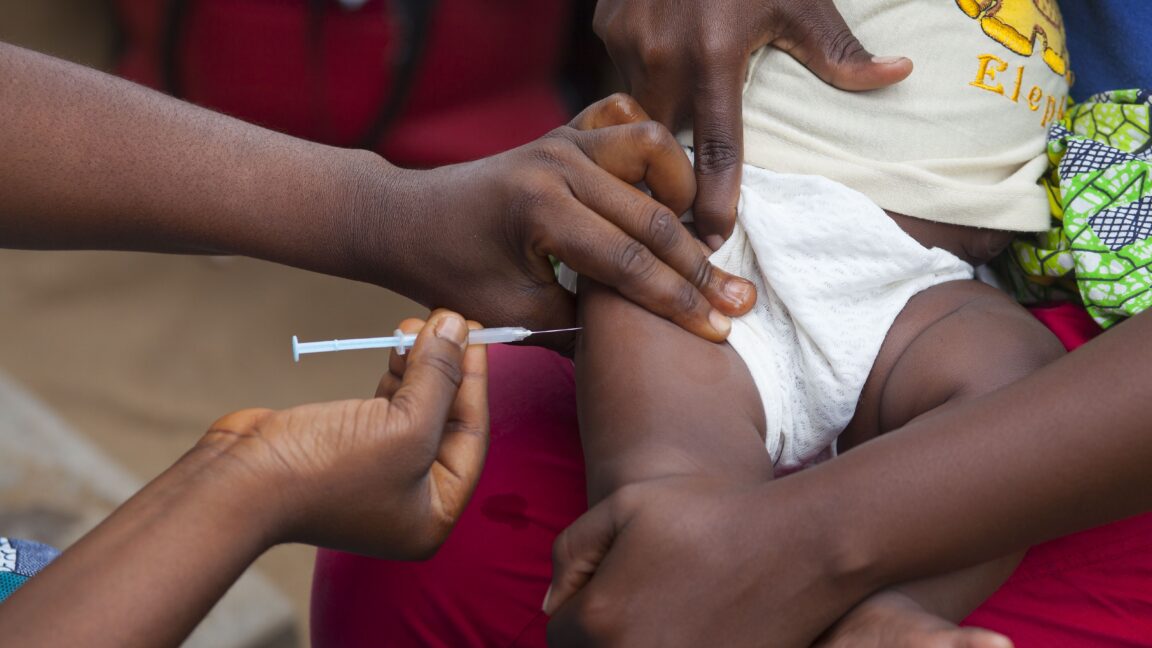
Government officials in Guinea-Bissau have formally rejected a clinical trial that would be run by Danish researchers and funded by the US to look for alleged nonspecific harms from the newborn dose of the hepatitis B vaccine. The vaccine dose is currently recommended globally for all newborns and has been used safely and effectively for decades. In an email to Ars Technica, one of the trial’s lead researchers, Christine Stabell Benn of Bandim Health Project and the University of Southern Denmark, said that Guinea-Bissau’s Council of Ministers “formally reaffirmed its non-acceptance of the study on 16 October.” The revelation that the study was formally rejected last week comes after news on Monday that judicial police in Guinea-Bissau raided Bandim Health’s offices and seized vaccines.
Stabell Benn highlighted that the police search came after the trial was rejected. Of the trial’s rejection, Stabell Benn wrote: “We regret the decision because we considered the study scientifically and ethically justified, but we respect the government’s authority to decide whether research may proceed in the country.” The World Health Organization and many outside experts have sharply disagreed with Stabell Benn and her colleagues on the trial’s justifications and design. It has been widely decried as “unethical” because it would withhold the newborn dose of hepatitis B vaccine from half of the participants.
With the country’s high rates of chronic hepatitis B infections, this would put thousands of babies at risk of developing a lifelong infection that can lead to liver cirrhosis, cancer, and premature death. Experts have further said that there is no scientific justification for the study, given the vaccine’s long use and strong safety record. The WHO wrote in February that the trial “posits hypothetical safety outcomes without sufficient credible evidence” to justify putting newborns at risk.
Extract — continue reading at the source.


