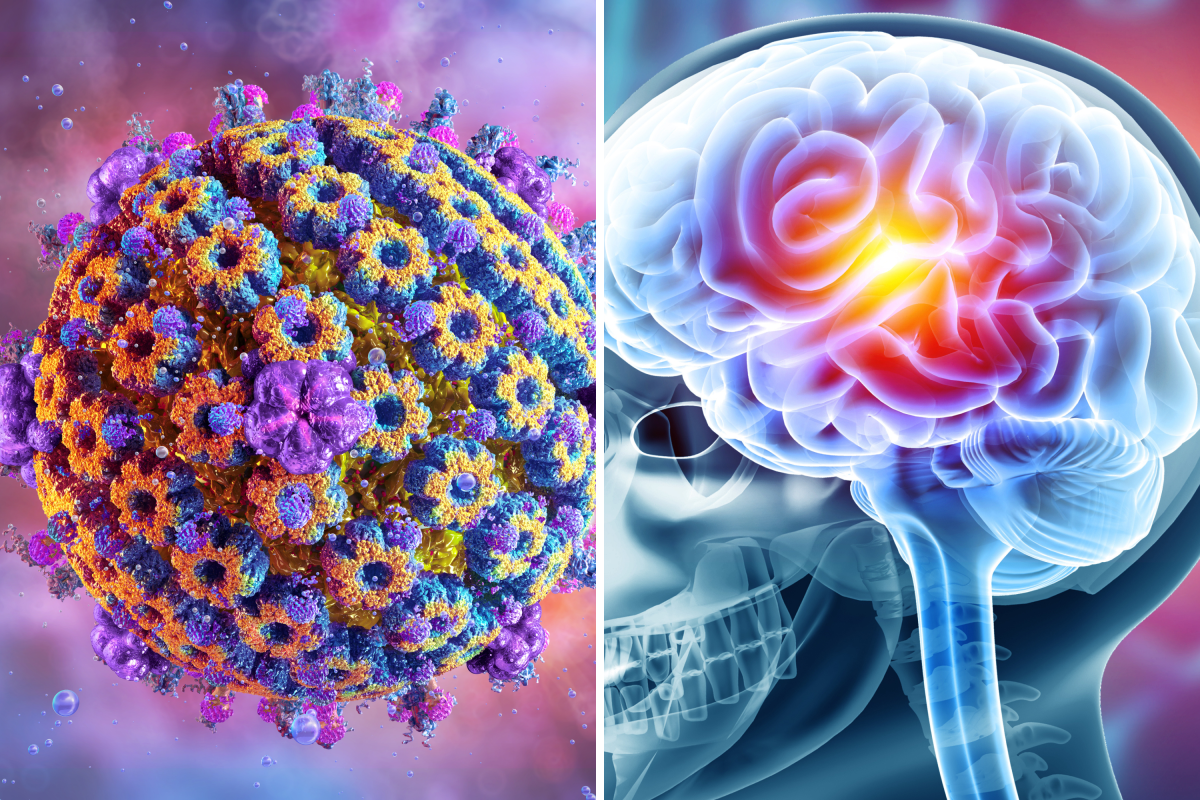
A virus carried by more than 60 percent of people worldwide may alter the brain's immune system in ways that could help explain a long-suspected link to Alzheimer's disease, according to new research. Scientists at the University of Colorado Anschutz found that herpes simplex virus type 1 (HSV-1), the virus responsible for cold sores, can reshape the behavior of microglia, the brain's primary immune cells. Their findings, published in PLOS Pathogens, suggest that while these cells mount a strong defense against infection, they may simultaneously lose some of their normal protective functions that help keep the brain healthy.
Kimberley Bruce, an associate professor of medicine at CU Anschutz and the co-senior author of the study, told Newsweek that one particularly intriguing finding was how closely virus-exposed immune cells resembled cells associated with major genetic risk factors for Alzheimer's disease. "Something we find very interesting is that the way the brain's innate immune cells respond to the virus makes them behave similarly to cells that carry some major genetic risk factors, such as ApoE4," Bruce said. "These cells express a lot of interferons, the antiviral machinery.
"So, one of the things we are hoping to explore is whether specific factors that target this interferon pathway can improve cell function without losing immune competence, to maybe reduce the risk of [Alzheimer's disease] a little bit." Dr. Christy Niemeyer, an assistant professor in the neurology department at the college's school of medicine and study senior author, also spoke with Newsweek about the findings. Bruce mentioned, we are also interested in the bigger picture, Alzheimer's is a complex disease with many genetic and environmental risk factors, and these factors don't exist in isolation.
Could these risk factors work together to make the brain more vulnerable to disease?" Niemeyer said. "Ultimately, we hope to better understand how these different risk factors interact and whether we can find ways to reduce harmful inflammation while still allowing the brain's immune cells to do their job." The research focused on understanding how HSV-1 influences microglia after infection. These specialized immune cells normally help maintain a healthy brain by clearing debris, supporting neurons and regulating inflammation.
Researchers found that once HSV-1 infects the brain, microglia shift into a highly activated antiviral state. This response is driven by interferons, molecules that play a central role in fighting viruses. However, the transition comes with trade-offs.
As microglia concentrate on combating new infection, genes linked to their normal maintenance and protective functions become less active and focused. Using advanced molecular techniques, the researchers analyzed how individual brain cells responded to HSV-1 infection. They identified distinct populations of microglia dominated by interferon signaling while discovering a reduction in activity among genes associated with routine brain maintenance.
Extract — continue reading at the source.
