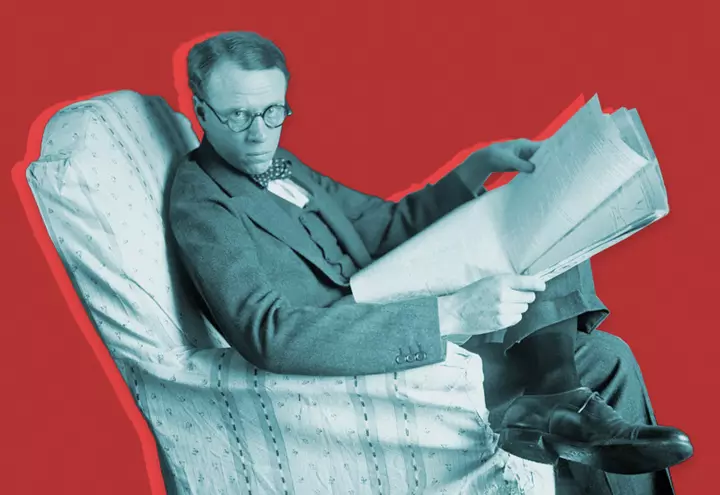
The old vaudeville phrase “Will it play in Peoria?” has its roots in the late 19th century, specifically in Horatio Alger’s novel Five Hundred Dollars; Or Jacob Marlowe’s Secret. Like all of the books Alger wrote extolling the virtues of thrift, study, grooming, industry, etc., this one articulates a middle American bootstraps philosophy and rags-to-riches mythology, while giving the entertainment industry a colorful way to sum up the small-town audiences who embraced Alger’s strait-laced ethic, and who needed to be pandered to or they wouldn’t get all those big-city jokes and references. Peoria has been many places in the U.S.—from Tulsa to Boise—but whatever the test market, the assumptions have always been the same: the American mainstream is insular, middle class or aspiring to it, culturally conservative, unfailingly white, and fearful of everyone who isn’t.
Such demographic dogma has persisted for over a hundred years. Even when it is shown to be outmoded or plain wrong, broadcasters and journalists continue to play to Peoria, genuflecting to a static, populist version of the U.S. that ignores large, rapidly changing segments of the population. In the early eighties it took an Englishman with a very high profile to interrogate this state of affairs on the air.
You may have come across the interview after David Bowie died, when social media filled with tributes and remembrances. One thread that got a lot of attention involved the transcript of a 1983 interview Bowie gave the fledgling MTV, in which he “turns the tables on reporter Mark Goodman,” writes Takepart’s Jennifer Swann, “to grill him about the youth-oriented network’s lack of ethnic diversity.” “It’s a solid enterprise, and it’s got a lot going for it,” says Bowie. Why is that?” On the spot, Goodman reaches for a marketing term, “narrowcasting,” to suggest that the network is deliberately targeting a niche.
But when Bowie keeps pushing, Goodman admits that the “narrow” demographic is the very same supposed mass market that existed in Alger’s day, when the only representations of black entertainers most white audiences in Peoria (or wherever) saw were in blackface. We have to try and do what we think not only New York and Los Angeles will appreciate, but also Poughkeepsie or the Midwest. Pick some town in the Midwest that would be scared to death by Prince, which we’re playing, or a string of other black faces, or black music.
We have to play music we think an entire country is going to like, and certainly we’re a rock and roll station. What do the Isley Brothers, asks Goodman, mean to a seventeen-year-old? To which Bowie replies, “I’ll tell you what the Isley Brothers mean to a black seventeen-year-old, and surely he’s part of America as well.” To the defense that it’s just the way things are, especially in radio, he gives a reply that might be derided by many in the ready-made terms that routinely pop up in such discussions these days.
Bowie, who successfully crossed over into playing for black audiences on Soul Train in the mid-seventies, would have sneered at phrases like “SJW.” As he says in response to one young fan who ranted in a letter about “what he didn’t want to see” on MTV: “Well that’s his problem.” The Peoria effect, says Bowie, “does seem to be rampant through American media. Should it not be a challenge to make the media far more integrated, especially, if anything, in musical terms?” The “lines are beginning to blur,” Goodman admits. At the end of that year, Michael Jackson’s John Landis-directed “Thriller” video debuted and “changed music videos forever,” breaking the primetime barriers for black artists on MTV, transforming the network “into a cultural behemoth,” as Swann writes, and giving the lie to the Peoria myth, one Bowie knew had little to do in actuality with the country’s culture or its tastes but with a narrow, archaic view of who the media should serve.
Extract — continue reading at the source.