Across many African literary traditions, the boundaries between the living and the dead, the seen and the unseen, are fluid rather than fixed. Ancestors, spirits, dreams, and myth are not simply fantastical devices but are unremarkable facts of lived realities, belief systems, and cultural histories. In contemporary African literature, these spirit worlds influence how writers explore memory, identity, history, violence, belonging, and the unseen forces at play.
Whether rooted in folklore, spiritual traditions, or the surreal, the ghostly often becomes another way of telling the truth. Our moderator is Karina M. Szczurek, an award-winning author, editor, publisher, and founder of Karavan Press.
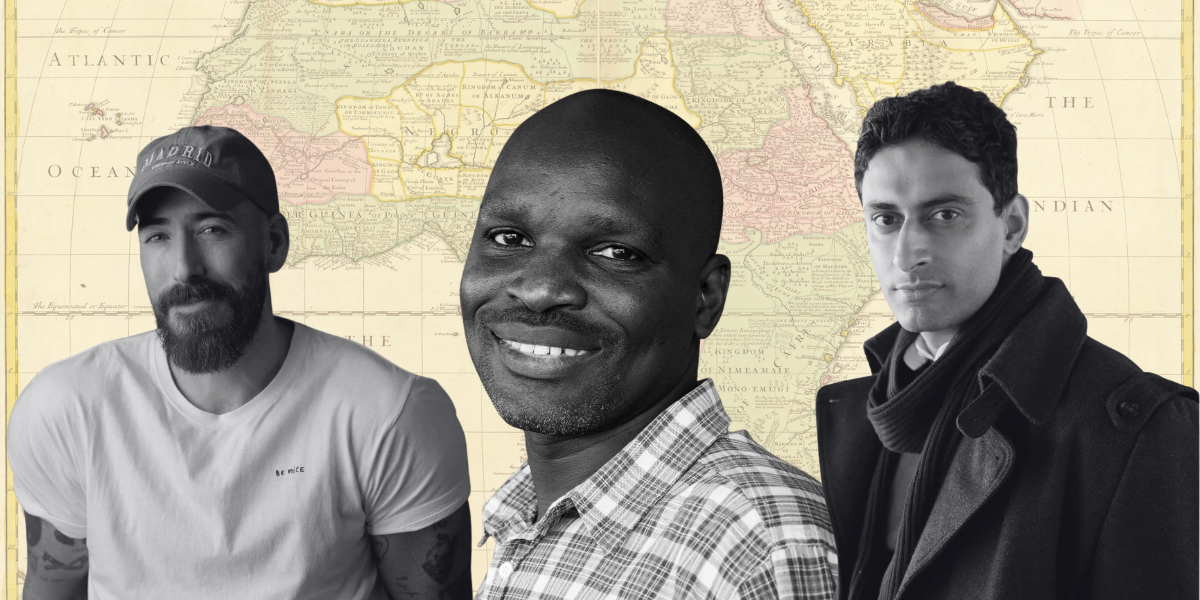
Joining her are Dilman Dila, a Ugandan writer and filmmaker whose work blends speculative fiction with folklore and spirituality; Sven Axelrad, the South African author of Buried Treasure, whose literary fiction draws on magical realism to blur the boundaries between the real and the uncanny; and Faraaz Mahomed, a South African writer who utilizes his background as a clinical psychologist and human rights researcher to examine both the emotional and spiritual dimensions of the human experience. Can you describe how ghosts and spirits feature in your books and what they mean to you? Dilman Dila: I don’t know if I ever call my characters ghosts or spirits.
If I did, then it’s at a moment when the education that has been drummed into my brain overshadowed my awakening. Using words like ghosts or spirits undermines what these entities actually are. When you talk of a ghost or spirit, you perhaps imagine a formless creature that looks human but can float about like a cloud, passing through walls at will.
Spirits too are depicted in a similar manner. But in looking at the world view of many African people, you’ll see that there are no ghosts, no spirits. When the dead return to the world of the living, it is rarely (perhaps never) in spirit form.
They might come back as animals (often as snakes, which is why snakes were not killed in many African cultures) or as birds. My ghosts are not omniscient narrators on life—they are still themselves, headstrong, selfish, caught up in petty pursuits, but they are kind too, more appreciative of friendship, humbled by their own deaths, very much rooting for the living. When I imagine a character, they are often an extension of myself, and they are as alive to me as the ancestors and all the other entities that populate the religious beliefs of African cultures.
Extract — continue reading at the source.