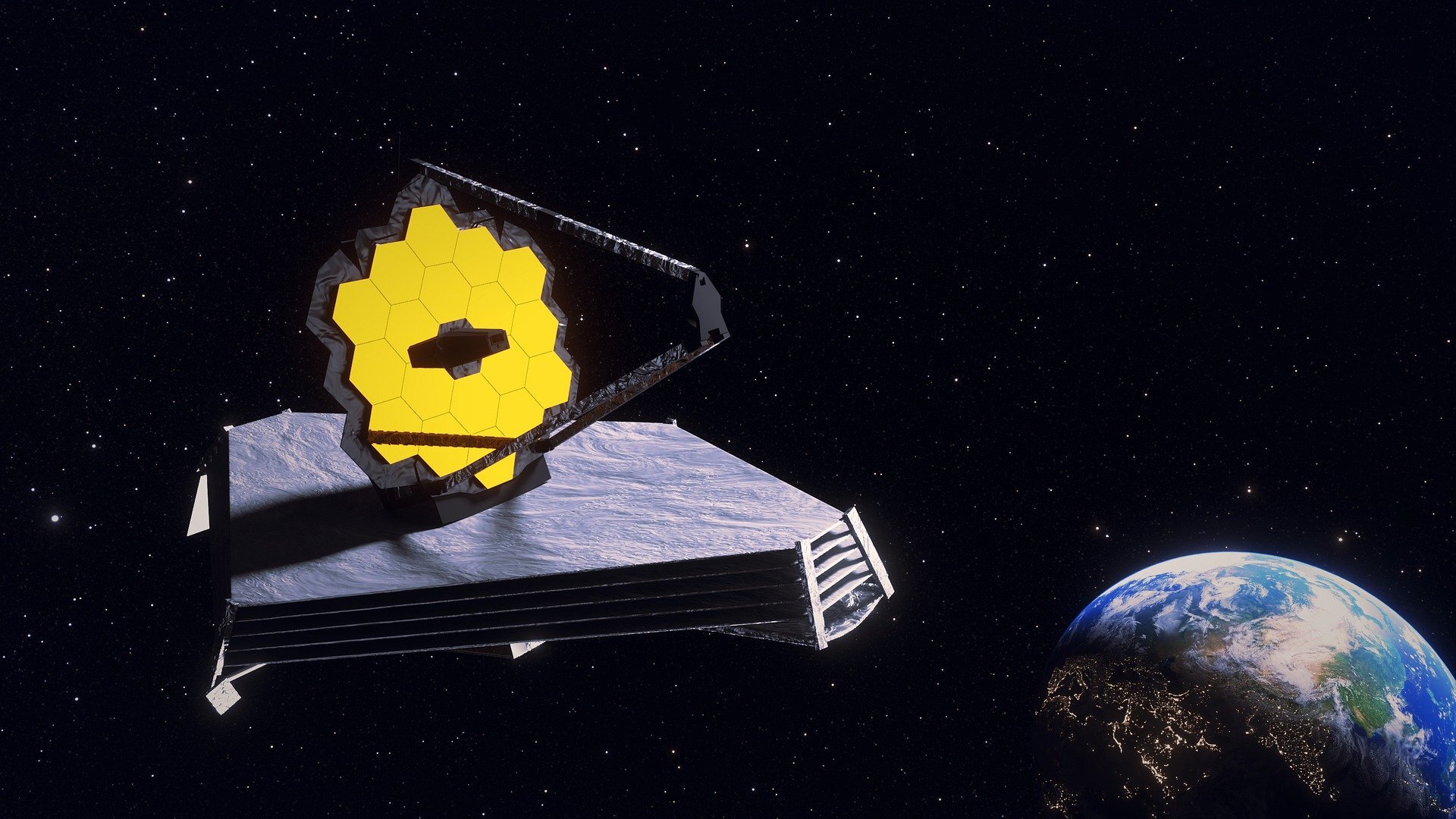
This article has been reviewed according to Science X's editorial process and policies. Editors have highlighted the following attributes while ensuring the content's credibility: Astronomers using the James Webb Space Telescope have measured the most powerful gas outflow ever recorded from a "dead" galaxy outside our cosmic neighborhood and found that even outflows this extreme may not be enough to permanently shut down star formation. Studying 23 massive, quiescent galaxies from roughly 11–13 billion years ago, researchers traced neutral gas being blown outward using a specific absorption signature in their light, detecting outflows in many of them.
Their paper was published in Astronomy & Astrophysics on Aug. 14. As matter falls into supermassive black holes, it releases huge amounts of energy that can drive powerful winds or outflows from the galaxy's center. These outflows can heat and expel gas, stir up star-forming material and prevent new stars from forming.
They can also cut off the gas supply to the black hole, helping regulate how galaxies evolve. Studying these outflows directly is key to understanding how galaxies die or "quench." Most outflow studies measure hot, ionized gas, but cool, neutral gas traced by the sodium "Na I D" absorption doublet often carries far more of the total outflow mass. "In galaxies with both neutral and ionized outflows, the neutral outflow rates are typically 10–100 times higher than the ionized outflow rates," researchers explain in the paper.
"JWST/NIRSpec has now enabled direct detections of Na I-traced outflows well beyond the local universe." Led by Pengpei Zhu of the Cosmic Dawn Center (DAWN) in Copenhagen, this study focuses on 23 massive quiescent galaxies—galaxies that have stopped forming new stars—taken from a JWST survey program called DeepDive, across a redshift range of 2.82–4.62. This translates to when the universe was roughly 1.3–2.3 billion years old. Searching for sodium signatures in galaxies, the researchers first removed the sodium absorption produced by stars themselves using detailed models of the galaxies' stellar populations.
Using thousands of simulated noise tests, they made sure the detected signals were real. For confirmed outflows, they modeled the absorption to measure the gas velocity, density and how much of the galaxy the outflow covers. These measurements were then used to calculate the mass of gas being expelled.
Finally, they compared the outflow speeds with each galaxy's escape velocity to determine whether the gas could escape or eventually fall back. Among these 23 ancient dead galaxies, they detected excess Na I D absorption in 13. Seven of the 23 showed clear blueshifted absorption, which means the gas is moving toward us and away from the galaxy.
Extract — continue reading at the source.