More than half a century ago, Pope Paul VI wrote in _Populorum Progressio_ that “development is the new name for peace.” Those words have a particular meaning for Lebanon today. I write as a Catholic bishop whose perspective is rooted in my pastoral experience. During the war, I visited displaced families almost every day, traveling to Christian villages in southern Lebanon.
I listen to families who have lost homes and livelihoods, who are afraid to return, or who wonder whether their children still have a future there. Those experiences have strengthened my belief that decisions of war and peace must belong to the Lebanese state, and that all Lebanese should look to the same institutions for their security. But they have also made me ask: Is the course we are on creating the conditions for lasting security or planting the seeds of the next conflict?
This week I am traveling to Washington to speak with U.S. policymakers. From D.C., the war in Lebanon can appear to be primarily a confrontation between Israel and Hezbollah, centered on Lebanon’s Shi’a community. From southern Lebanon, it looks different.
The South is home to Lebanon’s Shi’a, Christians, Druze, and others whose villages, livelihoods and futures have been intertwined for generations. Since the start of this war, Christians, too, have been displaced and our communities have been shrinking for decades as successive crises push young Lebanese to emigrate. While a house may eventually be rebuilt, a community is harder to reconstruct.
When people repeatedly lose their homes, livelihoods, relatives and sense of security, they begin to ask a very basic question: Who will protect us? But protection is not only about weapons. A young person also needs the prospect of building a future.
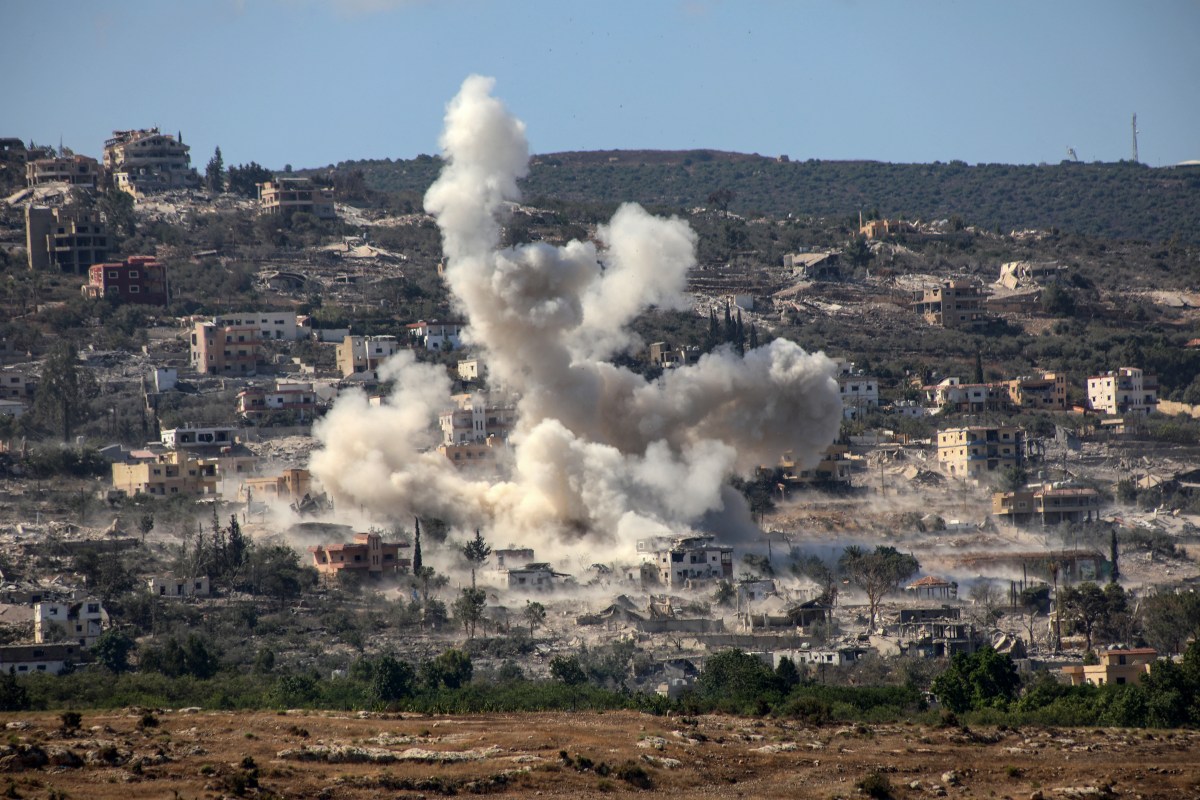
When the state cannot provide it, others step into the vacuum. Hezbollah has, accordingly, built its influence through schools, health care, salaries, social assistance, as well as arms and ideology. Smoke rises from the site of an Israeli airstrike on September 10, 2026, on al-Mansouri village, southern Lebanon. | Kawnat HAJU / via If we want young Lebanese to choose the state, we have to give them something meaningful to choose.
Extract — continue reading at the source.