We counted, and this midterm election cycle, there were just seven major-party candidates for Congress who had working-class jobs when they first got into politics. The last ballots are still being totaled, but many of the politicians from working-class backgrounds who ran won, or seem poised to win. During national elections, we often hear a lot about the rare candidates who had working-class jobs.
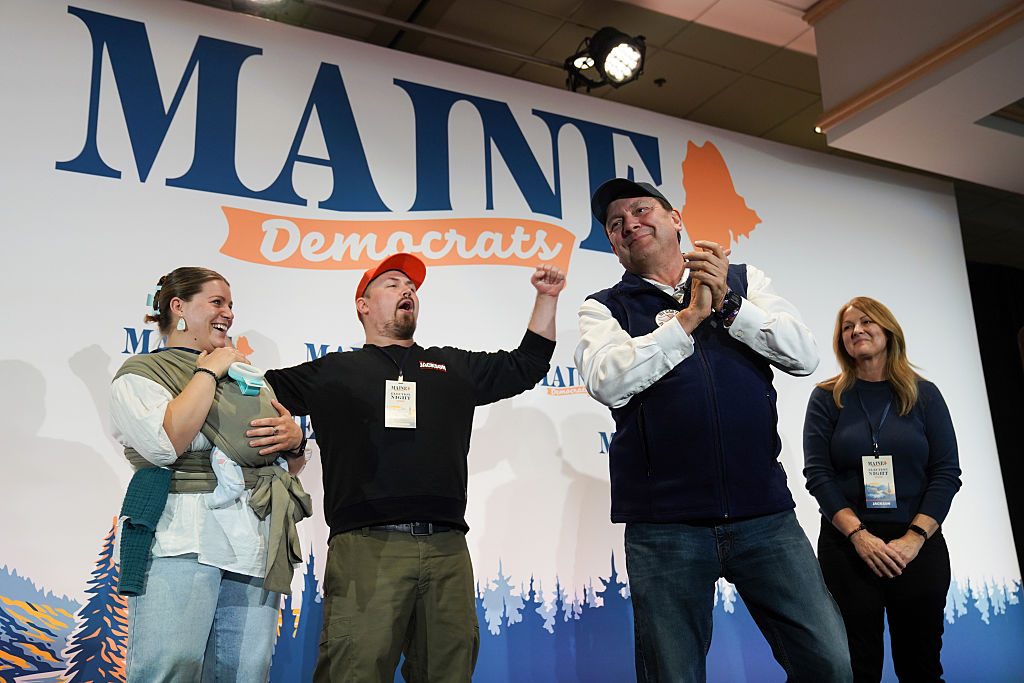
If you follow politics, you’re likely to know that Maine’s newly elected Senator Troy Jackson was a logger, or that New York Representative Alexandria Ocasio-Cortez was a bartender. But these candidates are the exceptions to an often-unspoken rule of U.S. politics: the working class doesn’t govern. Our research shows that people in working-class positions—manual labor jobs like construction worker, service industry jobs like restaurant server, and clerical jobs like receptionist—almost never go on to hold elected office.
Working-class jobs make up over half of our labor force, but historically, the share of members of Congress who last had a working-class job has never cracked 3%. The same pattern holds in state and local politics: as of 2024, in the average state legislature, less than 2% of members have, or last had, a working-class job. This kind of polarized inequality has real consequences.
Research from across multiple countries shows that when politicians from working-class jobs are scarce, people tend to trust their governments less. Studies from the U.S. and elsewhere show clearly that a shortage of politicians from the working class tilts economic policy against the concerns and priorities of working people—and in favor of the wishes of the well-off. As the old saying goes, in politics, if you’re not at the table, you’re on the menu.
What keeps working-class Americans out of office then? It isn’t that they run and lose, or that voters dislike them—it’s that they so rarely run in the first place. How candidates with working-class roots performed in the midterms Yesterday’s midterms were a case in point.
According to our tallies, there were 933 Republican and Democratic candidates for Congress, but the two major parties ran just seven candidates in the general election whose campaign websites listed a working-class job as their most recent non-elected occupations: Tim Rogers, a delivery driver (Wisconsin-4), Brian Poindexter, an iron worker (Ohio-7), Sam Forstag, a smoke jumper (Montana-1), Ray Pooley, a machinist (Michigan-9), Christopher Reichard, an electrician (Missouri-8), Rebecca Cooke, a waitress (Wisconsin-3), and Troy Jackson, a logger (Maine Senate). These seven candidates—so few you could easily write all of their names on a Post-It note—have recent experience in the kinds of jobs that most working Americans go to every day. Studies generally find that when working-class candidates run, they tend to do about as well as other candidates—and the 2026 midterms were no exception.
Extract — continue reading at the source.