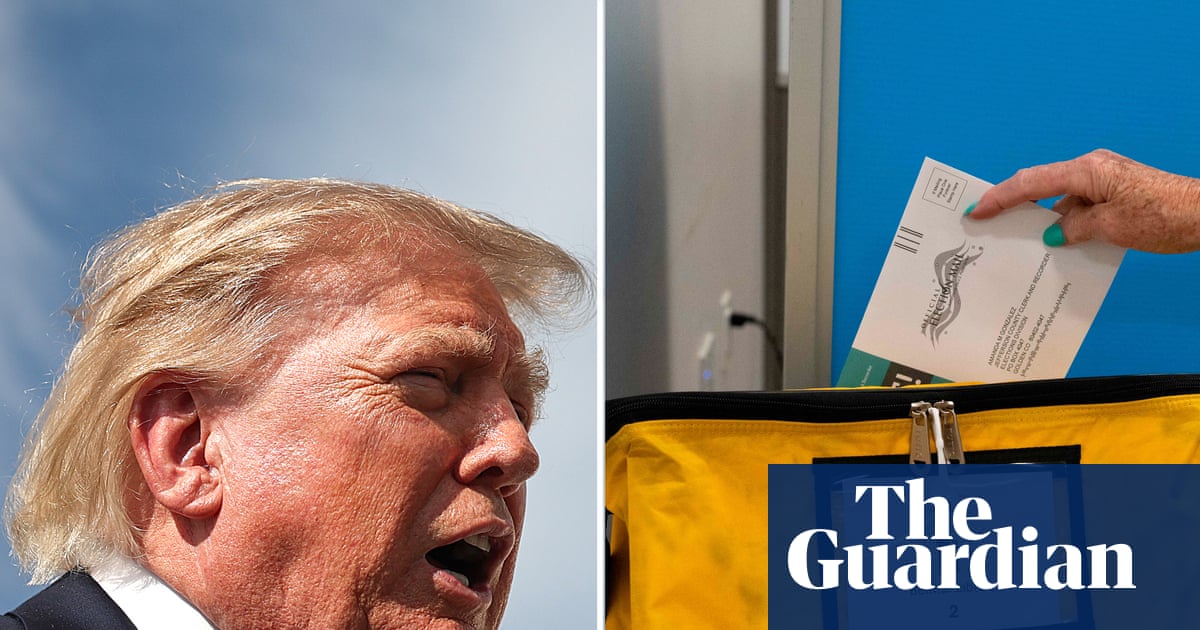
For the millions of Americans who vote by mail – almost a third of the country – the week began with significant uncertainty that they would be able to easily submit their ballot this fall, thanks to a March executive order from Donald Trump that aimed to restrict mail-in ballots. By Monday night, the supreme court restored a measure of order by rebuking the president and rejecting his plan – but Trump’s frothing response portends more danger for the rapidly approaching midterms. Trump’s March order forbade the US Postal Service from delivering mailed ballots to anyone the administration deemed ineligible.
The Department of Homeland Security, working with the Social Security Administration, would have devised that list of supposedly ineligible, noncitizen voters. On its face, the move appeared plainly illegal. One expert told the Guardian’s Sam Levine, “This is a wholly unconstitutional EO,” because ultimately the federal government cannot set election rules; only states can.
The plan was full of logistical problems, too. A whistleblower told Congress earlier this month that the Postal Service simply didn’t have the ability to implement the system safely, and that the whole plan was “perilously rushed and potentially unlawful”, according to Richard Blumenthal, the senator who handled the whistleblower complaint. State election officials also complained they would be unable to implement Trump’s restrictions this close to an election, even if they were deemed lawful.
Alabama, North Carolina and Wisconsin had already begun mailing out ballots before the supreme court ruled, and chaos would have reigned there and across the country had the court blessed Trump’s plan. But it didn’t – and that sent Trump into a furor. In a lengthy post on Truth Social, in which he called mailed ballots “corrupt and out of control”, he singled out the conservative justices who had gone against him on that issue and this year’s ruling on tariffs. (Only the justices Samuel Alito and Clarence Thomas dissented from the mailed ballot ruling; Amy Coney Barrett and Neil Gorsuch, both nominated by Trump, did not.) “These are not the people I interviewed to serve on the United States Supreme Court, they are merely a shell of their original selves,” the president fulminated.
His position is clear: the federal courts, the states that administer elections, the USPS – all of them should bow to his whims, regardless of what the constitution says. Trump has already shattered legal norms by appointing his former personal lawyer to head the Department of Justice and then continuing to treat him as a personal attorney. Just this week, in a remarkable scene at the White House, the US attorney general, Todd Blanche, served the role of White House press secretary, answering a wide range of questions from reporters on behalf of the president.
A day later, a smiling Blanche attended a Trump rally for the GOP Senate candidate Michael Whatley in North Carolina, flashing an enthusiastic thumbs-up from the crowd. The extraordinary danger of this moment is that a president who believes he is the law, and the law is him, remains intent on disrupting the electoral process. Trump’s claims about mail-in voting are false, as the Guardian’s George Chidi explained.
Extract — continue reading at the source.