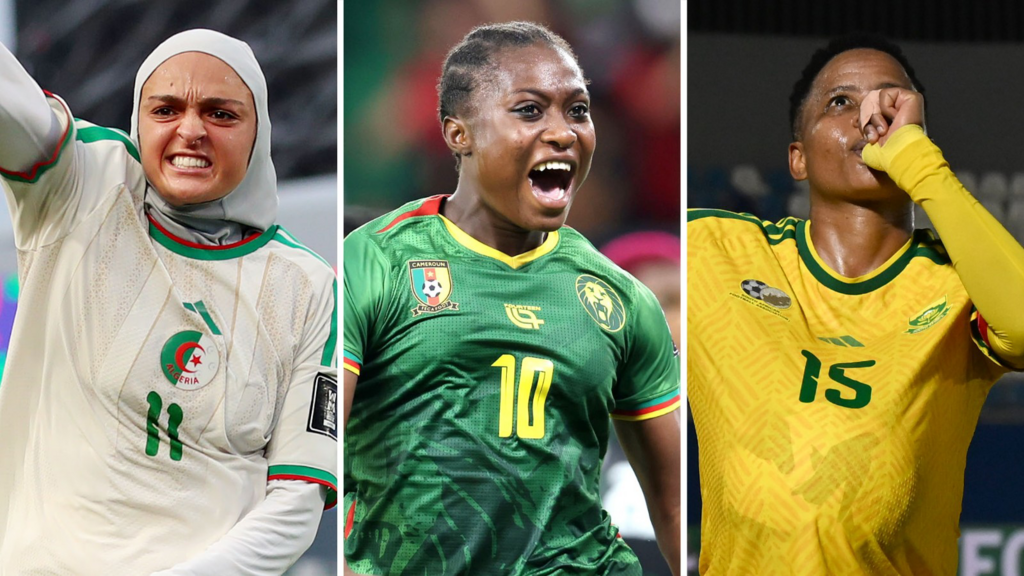
Cameroon became just the fourth nation to lift the Women's Africa Cup of Nations (Wafcon) trophy, joining Nigeria, Equatorial Guinea and South Africa as winners, after demolishing Malawi 3-0 in Sunday's final. The 2026 edition in Morocco can be largely deemed a success - even after it was postponed just 12 days before the finals were initially scheduled to kick off in March. BBC Sport Africa looks at what we learned from three weeks of competition in Rabat and Casablanca.
The decision by the Confederation of African Football (Caf) to expand Wafcon to 16 teams was justified although that announcement appeared a bit last-minute, coming as it did midway through a qualifying phase designed to provide 12 sides. The Indomitable Lionesses, eliminated by Algeria in those qualifiers, were the big beneficiaries of the expansion, advancing to the tournament on the strength of their world ranking before going on to claim the title. Ivory Coast, who like Cameroon missed the last Wafcon and also reached these finals thanks to their ranking, topped their group before losing to the Algerians in the quarter-finals.
All four semi-finalists booked their places at the 2027 Fifa Women's World Cup, meaning Malawi and the Algerians will make their debut at the global showpiece alongside Cameroon and Morocco. More high-level matches are required to aid the development of women's football on the continent and, on first viewing, the 16-team Wafcon format looks like it will help. Where the 2024 Wafcon saw few upsets, this tournament provided greater competitiveness and several shock results.
Tanzania bridged a gap of 65 places in the world rankings to upset South Africa in the group stage and the 2022 champions then needed a 99th-minute equaliser to salvage a point against Ivory Coast. Debutants Malawi were the fairy tale story, upsetting 10-time champions Nigeria with a 3-2 win in their opener before seeing off Ghana and Algeria to reach the final. Their success was built on the attacking prowess of the Chawinga sisters, but the Scorchers will certainly climb from 153rd in the world - and 32nd in Africa - when Fifa updates its rankings.
Zambia were unfortunate not to reach the knockout stage despite amassing six points in Group C, while Mali were eliminated on goal difference after finishing level with Ghana on four points in Group D. Cape Verde, Egypt and Kenya were the only sides not to win a game, with the North Africans conceding 15 goals and the Harambee Starlets failing to find the back of the net. There were 90 goals scored in 32 games (excluding the two Women's World Cup play-offs) with the average of 2.81 goals per game an increase on the average of 2.54 from the 2024 edition.
Cameroon's Valentine Nguele became the fifth female coach to lead a side to glory in what was the 14th edition of the finals. She emulates Clementine Toure (Equatorial Guinea, 2008), Eucharia Uche and Florence Omagbemi (Nigeria in 2010 and 2016 respectively) and Desiree Ellis (South Africa, 2022). Her achievement is all the more impressive given that she only took over in June.
Extract — continue reading at the source.