And yet to be human is to long for constancy, to crave the touchingly impossible assurance that what we have and cherish will be ours to hold forever, just as it is now. We build homes — fragile haikus of concrete and glass to be unwritten by the first earthquake or flood. We make vows — fragile promises to be upheld by selves we haven’t met in a future we can’t predict.
The dearer we hold something, the more tightly we cling to the dream of constancy, the more zealously we torture ourselves with the belief that any change is loss. Naturally, it is in our intimate relationships that we most come to fear change and most suffer when it comes — a fear not at all groundless, given what relationship rupture does to our limbic system. The salve for this singularly discomposing suffering comes not from ossifying change but from changing our beliefs about it.
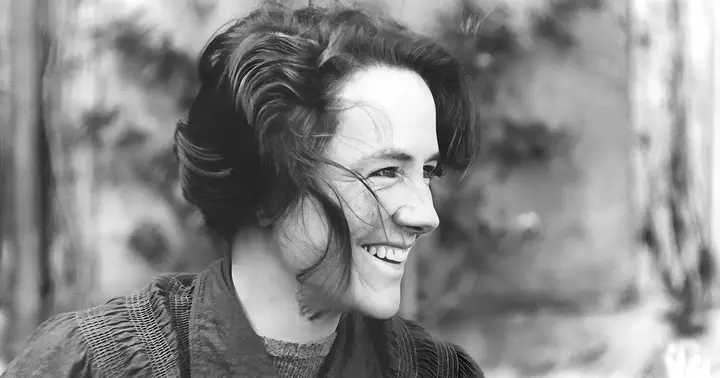
Such salutary recalibration is what the aviator and writer Anne Morrow Lindbergh (June 22, 1906–February 7, 2001) offers in Gift from the Sea (public library) — a book I found in a Little Free Library and felt immediately speaking to my soul, drawn from the diaries Lindbergh kept during two weeks of solitude on the ocean shore “searching for a new pattern of living” as she was entering the second half of her life, that vital “period of second flowering” when one is “free for growth of mind, heart and talent.” Reflecting on the natural trajectory of intimate relationships, she writes: The pure relationship, how beautiful it is! How easily it is damaged, or weighed down with irrelevancies — not even irrelevancies, just life itself, the accumulations of life and of time. For the first part of every relationship is pure, whether it be with friend or lover, husband or child.
It is pure, simple and unencumbered. It is like the artist’s vision before he has to discipline it into form, or like the flower of love before it has ripened to the firm but heavy fruit of responsibility. Every relationship seems simple at its start.
The simplicity of first love, or friendliness, the mutuality of first sympathy seems, at its initial appearance — even if merely in exciting conversation across a dinner table — to be a self-enclosed world. Two people listening to each other, two shells meeting each other, making one world between them… It is free of ties or claims, unburdened by responsibilities, by worry about the future or debts to the past. And then how swiftly, how inevitably the perfect unity is invaded; the relationship changes; it becomes complicated, encumbered by its contact with the world.
While this is true in most relationships, Lindbergh observes, the pattern is most pronounced — and most painful — in our most intimate bonds. And yet the pain we experience as a relationship exits this early stage of unselfconscious mutual elation is not evidence of loss — it is evidence of our misshapen ideals of closeness as a static pattern of attachment. She offers an alternative orientation to the inevitability of change: We mistakenly feel that failure to maintain its exact original pattern is tragedy.
Extract — continue reading at the source.