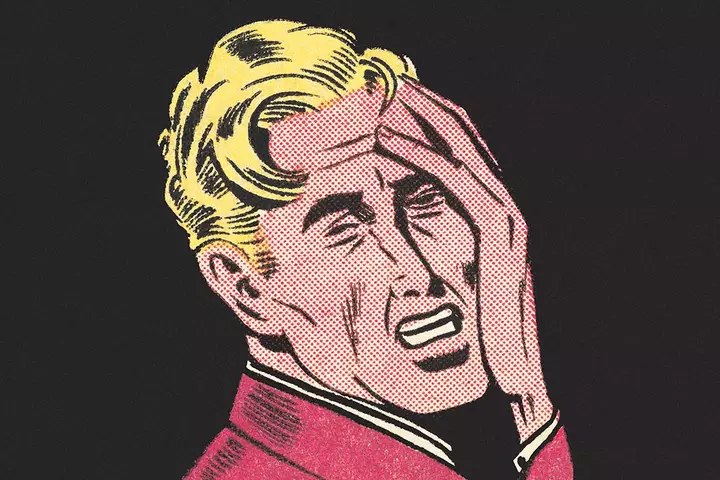
The icon indicates free access to the linked research on JSTOR. It can happen when your mom makes an awkward comment about a server’s makeup, when your friend publicly expresses their devotion to a show you think is unbearably stupid, or when you read an article about someone on “your side” in a national cultural battle doing something embarrassing. Your stomach drops, your heart races, you sink down in your seat.English and women’s studies scholar J.
Logan Smilges argues that this moment of cringe is both emotional and political. Smilges describes cringing as “a physiological response to an affective crisis,” a mechanism related to a disconnect between two people regarding a violation of a social norm. It’s not simply that someone is doing something out of the ordinary but that they perceive their own actions differently than you do.
To understand this, Smilges suggests looking at the opposite of cringe. They give the example of learning that a fellow faculty member also watches _The Real Housewives of Atlanta_. This commonality of feeling both creates a bond between two people and reaffirms their felt experience as legitimate.
In contrast, we cringe in situations where we had believed our feelings aligned with those of another person, but then their behavior suggests a disjunction. We cringe not because our friend dances awkwardly but because they don’t recognize, or don’t care about, the awkwardness. Understanding its cause can help us decide how to respond.
Smilges argues that depictions of cringe in media often hinge on disability. In one episode of _The Office_, for example, characters bully Kevin, calling him a “dummy” and an “idiot.” But the audience is not intended to cringe in solidarity with Kevin or in embarrassment at those insulting him. Instead, the moment of cringe comes when Holly, attempting to defend Kevin, refers to him as “mentally challenged.” “The ethicopolitical stance affirmed by the scene is that it is a far worse crime to incorrectly suspect that a person is disabled than to launch ableist insults at people we don’t like,” Smilges writes.
Meanwhile, disabled people may fall outside the circle of affective alignment that allows us to cringe. If someone is repeatedly viewed as cringeworthy—a common experience for neurodivergent, disabled, and queer people—others may stop viewing them as someone they share feelings with at all. This field is for validation purposes and should be left unchanged.
Extract — continue reading at the source.