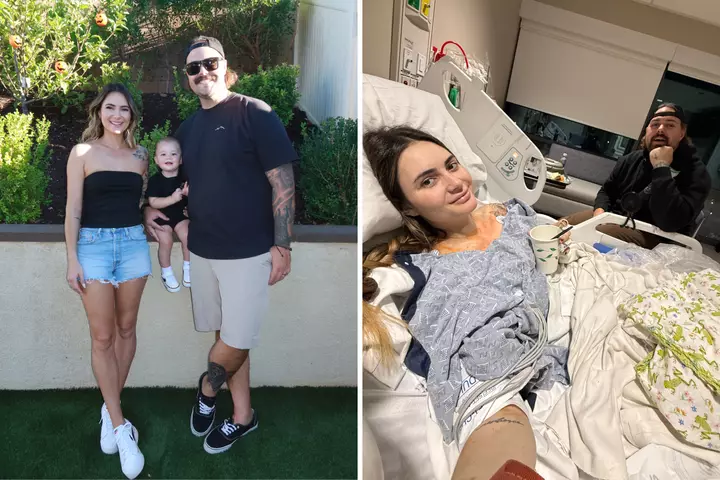
A new mother has described the terrifying moment she suffered a cardiac event and collapsed while making a speech at her brother’s wedding. September 28 marked a monumental day for Amanda Simonsen and her family, as she got to celebrate her brother Austin’s wedding to Maddie. During the reception, Simonsen, who lives in Orange County, California, wanted to make a speech to show her brother and sister-in-law just how much they mean to her and celebrate their special day.
Indeed, Simonsen told Newsweek that standing in front of everyone and expressing her love for her family was incredibly emotional because she was “grateful to be there” following a medical emergency earlier this year. On February 13, 2026, Simonsen suffered a sudden cardiac arrest at the age of 30 while at home with her 4-month-old son. Her husband, Tyler, found her unresponsive and performed CPR until first responders arrived.
She spent two weeks in hospital and was ultimately diagnosed with idiopathic ventricular fibrillation and nonischemic cardiomyopathy and fitted with an implantable cardioverter-defibrillator (ICD). The term “idiopathic” is used when no underlying cause is identified. It wasn’t simply another family wedding on the calendar.
It was something I hoped I would survive to experience, and I wanted to take it all in.” On the day of the wedding, Simonsen, who is a deputy sheriff, said she felt “completely normal” and tried to take it easy. There were no indications of any problems until she stood up to make her speech and began to feel dizzy. By then, there was little time to react.
I fell to the ground and hit my head. I remember everything up until that point and woke up in my husband’s arms and knew exactly what had happened,” Simonsen said. Simonsen experienced ventricular tachycardia, an abnormally fast rhythm originating in the heart’s lower chambers, or ventricles.
Sustained ventricular tachycardia can prevent the heart from pumping blood effectively and, in severe cases, can lead to cardiac arrest. The ICD implanted in her chest continuously monitors her heart rhythm. Such devices are designed to recognize potentially life-threatening ventricular rhythms and deliver electrical therapy, including a shock when necessary, to restore a safer rhythm.
Extract — continue reading at the source.