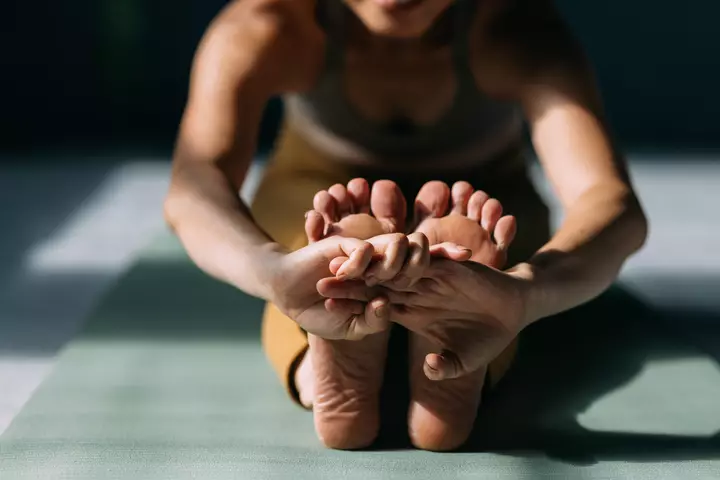
Yoga and Pilates have become fitness mainstays for good reason: Both are low-impact activities that work small muscles you didn’t even know you had. (Seriously, have the backs of your knees ever been sore?) They’re also effective forms of cross-training—especially for runners. Incorporating practices like these into your routine can help you stay healthy, build endurance, and reduce your risk of injury. That’s because running is a one-directional movement, meaning you can develop imbalances, says Shannon Rowbury, a BowFlex fitness adviser and three-time U.S.
Olympic middle-distance runner and medalist. Running is also repetitive, which means that any imbalances can amplify over time, she continues. 🏃🏻♀️ Learn how to balance running with complementary workouts that build strength and help prevent injuries in the Runner’s World Guide to Cross-Training. Not only does it offload some pounding if your muscles and joints need some rest, but it also activates and strengthens the muscles that might tend to be overpowered by our prime movers.” Both yoga and Pilates can achieve this, but in different ways.
So, which activity deserves a dedicated spot in your training schedule? We break down how yoga and Pilates stack up for runners, their advantages and disadvantages, and how to choose the right fit for your goals. Yoga can be a great complement to running, particularly for mobility, balance, body awareness, and recovery, according to Shavonne Wood, a certified yoga and Pilates instructor and marathon runner.
When certain muscles feel tight, yoga can provide a structured way to move through different ranges of motion rather than just doing a few static stretches after a run, she explains. In addition to physical benefits, there are mental benefits as well. Training for a race can become very performance-focused in terms of pace, distance, heart rate, workouts, and race goals, Wood says.
Yoga can give runners an opportunity to slow down, focus on their breathing, and move without another performance metric attached to it. Not to mention, yoga helps runners become more in tune with their bodies, allowing them to recognize when they might need a rest day from running or when they need to pull back to prevent burnout, overtraining, and injuries, according to Theresa DeLorenzo, yoga therapist, Pilates instructor, and owner of Nutrition for Optimal Performance. Yoga varies enormously, according to Wood.
A gentle mobility-focused class and a very intense power yoga class are completely different training stimuli. Runners need to consider where that session fits into their overall training load, she explains. Wood also cautions against assuming that having more flexibility is always better.
Extract — continue reading at the source.