As well as her film about her own difficult teenage years, British director Lorna Tucker is probably best known for her documentaries on famous women with big personalities: Vivienne Westwood (Westwood: Punk, Icon, Activist), Katharine Hepburn (Call Me Kate) and Greta Garbo (Garbo: Where Did You Go?). Her latest subject, pianist Yuja Wang, is another high-achiever – but not someone with quite the same name recognition unless you’re a devotee of classical music, a field in which she is ranked among the very best alive. Wang certainly has a flamboyant side, expressed in her highly expressive, virtuoso performances and her sartorial style on stage.
In fact some shocking pull quotes illustrate how her dress sense has been bizarrely over-examined in the press; she has been likened to a stripper for her outfits, and the New Yorker, of all publications, once described her as “fat”, which hardly seems germane to any discussion of her ability to play Tchaikovsky or Ligeti. But Wang’s biography and the texture of her daily life are very different from that of Tucker’s previous subjects. She was a child prodigy from an artistic Beijing family who came of age just in time to break records for views on YouTube.
Sure, her life here looks glamorous in one way, with a lush New York apartment she barely ever sees because she’s constantly on the road. But her life is also one of perpetual practice and striving for perfection, the loneliness of the long-distance soloist. It’s a regimen that leaves almost no time for relationships or family, or even many friendships with peers who understand what she is going through – apart from a few mentors or collaborators such as fellow pianist Emanuel Ax or composer Teddy Abrams, with whom she recently won a Grammy.
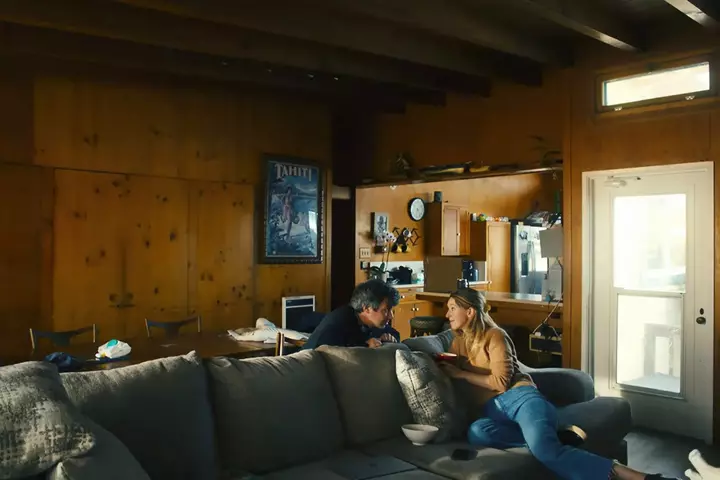
Still, she comes across as an effervescent character, intellectually curious and deeply attuned to the music she plays. This film doesn’t necessarily rise to the same level of technical perfection, but the cinematography by Seamus McGarvey is full of unexpected reflections and lovely slanting light falling through rooms towards dusk. In the interludes where Wang plays an assortment of pieces (while those pull quotes appear onscreen) there is more abstract imagery – out of focus sunlight, dappling water, drone shots of assorted landscapes – that is a bit screensaver chic, but it’s the music that counts in the end, and that’s divine.
Extract — continue reading at the source.