Autism spectrum disorder (ASD) is a highly heterogeneous neurodevelopmental condition caused by many genetic mutations, each conferring modest individual risk. Despite its genetic complexity and clinical burden, no effective treatments targeting core symptoms are available. Although ASD is diagnosed as a single disorder, accumulating evidence suggests that it comprises biologically distinct subtypes, yet how genetic risk maps onto phenotypic substructure remains poorly defined.
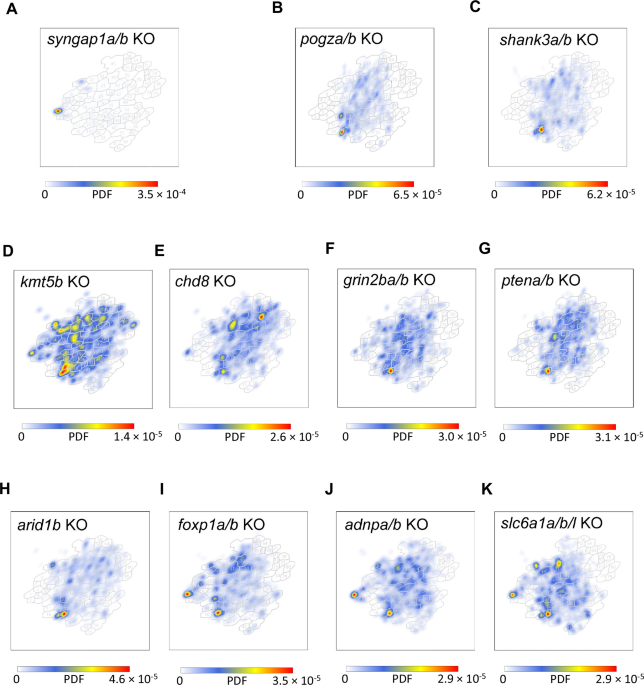
Here, we apply zebrafish behavioral phenomics to systematically link ASD risk genes to functional behavioral subtypes in vivo. Using an unsupervised deep learning-based behavioral profiling platform, ZeChat, we characterized the behavioral repertoires of zebrafish mutants for 11 high-confidence ASD risk genes. ZeChat analysis revealed distinct behavioral phenotypes for each mutant that was classified into three behavioral subtypes (Clusters 1–3) via hierarchical clustering of their behavioral fingerprints.
By integrating mutant phenotypes with a large neuroactive drug phenomics database, we identified subtype-specific correlations with serotonergic, dopaminergic, and opioid receptor-modulating compounds. Using an orthogonal social preference assay, Fishbook, we further demonstrate subtype-specific pharmacological rescue of social deficits, including selective rescue of the Cluster 3 mutants arid1b, adnp, grin2b, pten, and the Cluster 2 mutants pogz and shank3, by μ-opioid receptor antagonists. Together, these results demonstrate a scalable in vivo framework for behavioral phenomics-driven classification of ASD risk genes into functional subtypes and discovery of targeted rescue strategies.
Autism spectrum disorder (ASD) is characterized by persistent deficits in social interaction and communication, accompanied by restricted interests and repetitive behaviors. Recent estimates by the CDC indicate that approximately one in thirty-one children in the United States is diagnosed with ASD. Despite decades of research, there are currently no effective treatments that target the core social deficits of the disorder.
A major obstacle to therapeutic development is the extraordinary biological complexity of ASD, which arises from the intricate processes governing brain development and function and from the disorder’s profoundly heterogeneous genetic architecture. Large-scale human genetic studies have identified dozens of high-confidence ASD risk genes [1, 2], with many more genes contributing more modestly to disease susceptibility. No single gene accounts for more than a small fraction of overall ASD risk [3, 4], and pathogenic variants span diverse functional categories, including synaptic signaling, chromatin regulation, transcriptional control, and intracellular signaling pathways.
This polygenic architecture suggests that ASD is not a single disease entity but rather a collection of genetically distinct neurodevelopmental conditions that converge on overlapping behavioral symptoms. Consistent with this view, individuals diagnosed with ASD exhibit wide variation in symptom severity, developmental trajectories, and comorbidities, motivating the concept of ASD subtypes defined by shared biological or phenotypic features. Multiple lines of evidence support the existence of biologically meaningful ASD subtypes.
Extract — continue reading at the source.