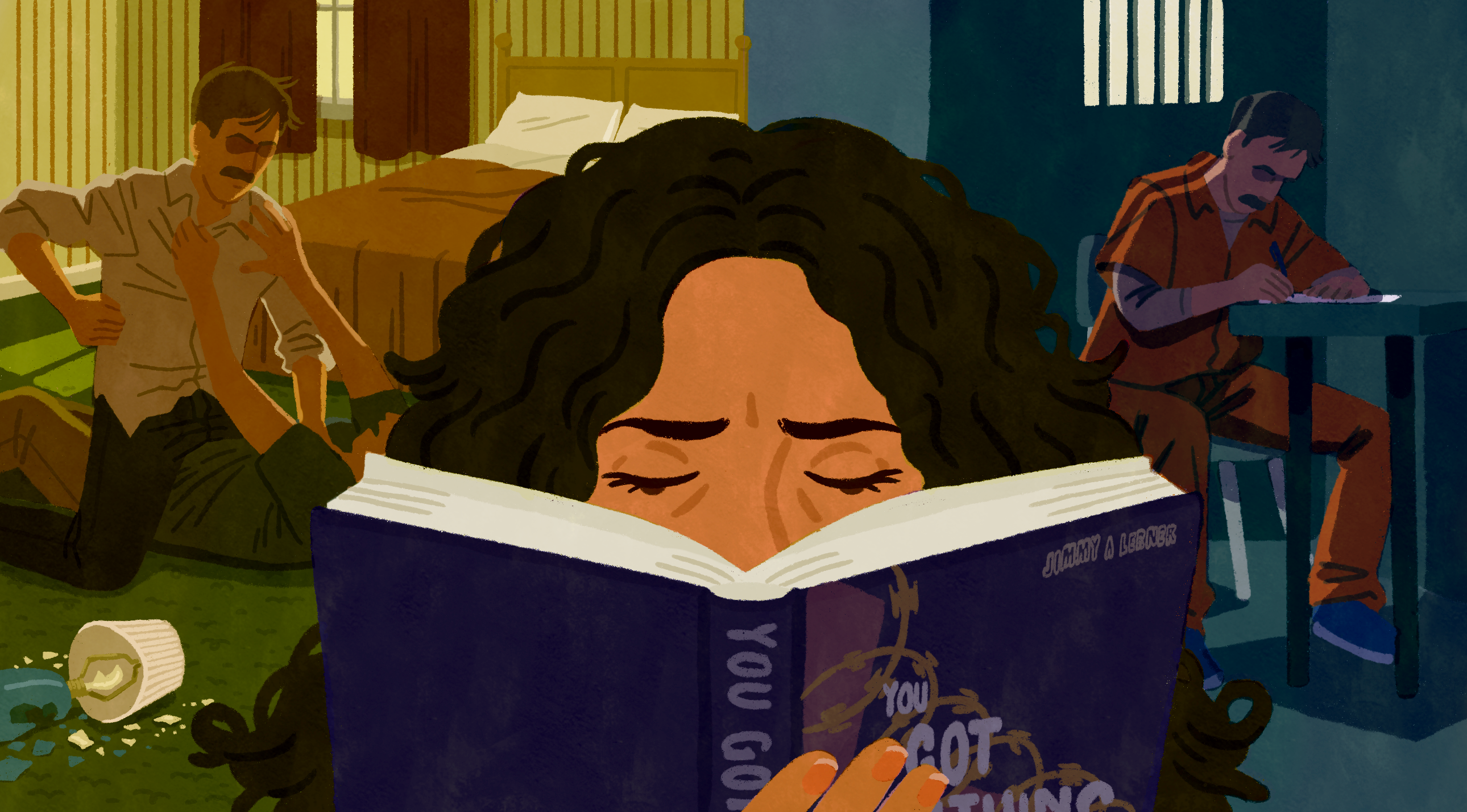
This spring, I read Harriet Clark’s novel, The Hill, about a girl named Suzanna who grows up visiting her mother in a prison on a hill. I had just published a long Mother’s Day essay in Esquire, grappling with having spent the past twenty-five years in prison, unable to show up for my mother as she grew old. It struck me that Harriet’s novel dealt with a kind of inverse of my situation, and I was surprised to see some of myself in Suzanna—her abandonment, shame, helplessness.
Suzanna’s mother was part of a revolutionary group, the getaway driver in a bank robbery, which left one guard dead, and she was sentenced to life in prison. Suzanna’s grandmother, who raises her, antagonizes the situation and tells Suzanna that her mother chose a political cause over her responsibilities as a mother. The Hill is the kind of fiction that rhymes with real life.
In 1981, Harriet Clark’s mother, Judith Clark, drove one of the getaway cars in the notorious Brinks armored truck heist. By the end of the doomed plot, a Brinks guard and two police offers were shot and killed. Judith wound up with 75 years to life.
Harriet was eleven months old when the robbery went down, and, like Suzanna, grew up visiting her mother in prison. Harriet was raised by her grandmother, but unlike Suzanna, she was also raised and mentored by people in her mother’s collective. I served time with one of Judith’s codefendants and I know their ilk: kind, educated, idealistic, and always of service to the people around them.
Harriet went to Stanford, got an MFA from the Iowa Writers’ Workshop, received a Stegner Fellowship in fiction. She taught creative writing at Stanford for twelve years, and edited fiction at The Paris Review. Harriet lives in New York with her wife and son.
She likes helping people develop their projects, books and sometimes films, but she told me that The Hill was “the one story I had to tell.” “I hope that one can feel the truth and necessity of personal responsibility in the book—the mother has contributed to loss of life, the mother has left her child,” she added, “but the greatest source of suffering in the book, the suffering that impacts the most people, is the prison.” I called Harriet from Sing Sing, and exchanged emails with her through my publicist. Below is our conversation, about mothers, writing, abandonment, and prison. Lennon: In The Hill, the narrator Suzanna’s mother takes part in a bank robbery, winds up with life in prison, and leaves her daughter without a mother, at least in the traditional sense.
Extract — continue reading at the source.