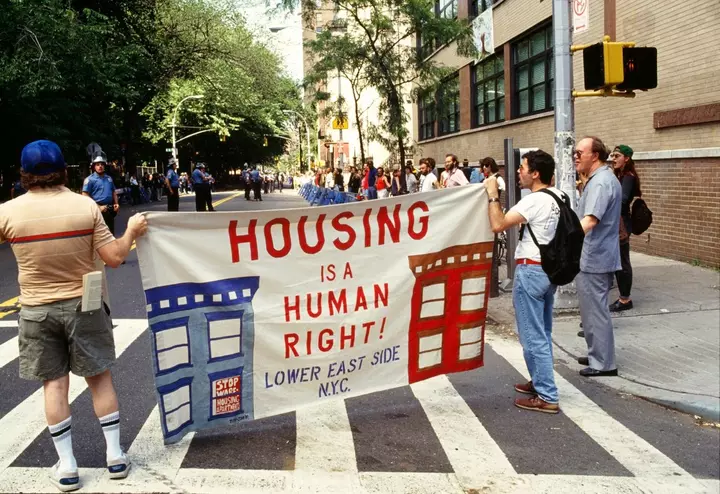
Architects warn that solving affordable housing goes beyond design and finance and requires a collaborative approach to policy change. The architects’ concerns come as this month marked World Architecture Day, created by the International Union of Architects (UIA) and observed on the first Monday of every October. This year's theme was “Housing is a Human Right.
Build It.” The theme runs parallel to the United Nations World Habitat Day 2026 theme, “Adequate Housing for All.” The UIA warns that “access to adequate housing must be recognized as a fundamental right” and “architecture contributes to making this right a reality.” Newsweek spoke with several architects who highlighted the key challenges and measures needed to combat the affordable housing crisis worldwide. Architect Daniel Baumann, principal and design director at Henning Larsen, told Newsweek that “the greatest opportunity is already standing,” noting that converting and adapting underused buildings is “the fastest, most affordable and most sustainable way to create housing.” Building new communities from scratch is costly, drains energy and resources, and is often impractical, he said, citing permit issues and the distances created between where people work and study. However, Baumann said vacant buildings and underused land sit within existing neighborhoods, with transit, schools, and services already in place.
The UIA also agreed, noting that addressing the housing crisis requires “practical, sustainable and context-responsive approaches,” including developing inclusive housing models and reusing existing building stock. Architect Scott Specht, founding partner at Specht Novak, told Newsweek that the change he’d like to see that carries the most potential is zoning reform, referring to “what cities, and the people who vote in them, are willing to let get built.” He explained: “You can invent the cheapest wall system in the world and it won't make a dent in affordability if the zoning code says you can only put one house on a quarter-acre lot.” Specht said Austin, Texas, serves as “pretty good evidence that this works.” When the city council adopted the HOME reforms a few years ago, which allowed owners to build up to three units on a single-family lot and shrink lots to 1,800 square feet, many residents opposed them. However, the reform passed despite the pushback, and Austin later became the largest city in the country to eliminate parking requirements.
Specht said that the move led the city to build apartments “faster than anyone could move into them,” and rent prices dropped more than in any other city in the country, with home prices down about a fifth from their 2022 peak. He noted: “Interest rates and slower migration played a part, but the main reason is simply that there are a lot more places to live here than there were five years ago.” The attitude seems to be shifting in places you'd never expect, he said, pointing to San Francisco. Specht said the city “pretty much perfected the art of blocking new housing,” but last December approved a rezoning plan that opens up much of the city's west and north sides to taller apartment buildings.
While some local opposition to new housing construction hasn't gone away, “I think more people are noticing that their own kids can't afford to live in the neighborhoods they grew up in, and that has changed a lot of minds,” Specht said. Architect Max Berger, an associate at Fogarty Finger Architecture and the principal at MSB Architecture, notes that design alone cannot resolve a systemic affordability crisis. He told Newsweek that “meaningful progress requires policies that enable more housing to be built and ensure that affordable housing remains accessible to the people who need it.” Architect Carmine Cafiero, managing principal at Purple Cherry Architecture & Design, agreed that a greater emphasis on approaching zoning reform as a collaborative design problem rather than something developed in isolation is needed.
Cafiero told Newsweek that bringing government officials, zoning and planning staff, architects, developers and community members together in working sessions can produce zoning ordinances that better reflect how people actually need to live today. In February 2025, Secretary of Housing and Urban Development Scott Turner announced that the federal government would be ending the Biden-era 2021 Affirmatively Furthering Fair Housing (AFFH) rule, aiming to cut “costly red tape imposed on localities and returning decision-making power to local and state governments.” HUD described the AFFH rule as effectively a “zoning tax,” saying in June 2025 that it “fueled an increase in the cost and a decrease in the supply of affordable housing due to restrictions on local land.” HUD has previously introduced other measures to help lower housing costs and improve affordability. In May, the department announced updates to environmental review requirements for multifamily housing, “removing outdated provisions that have increased costs and complexity for lenders and developers.” “This is about fixing policies that have made housing expensive and difficult to build,” Turner said at the time.
Extract — continue reading at the source.