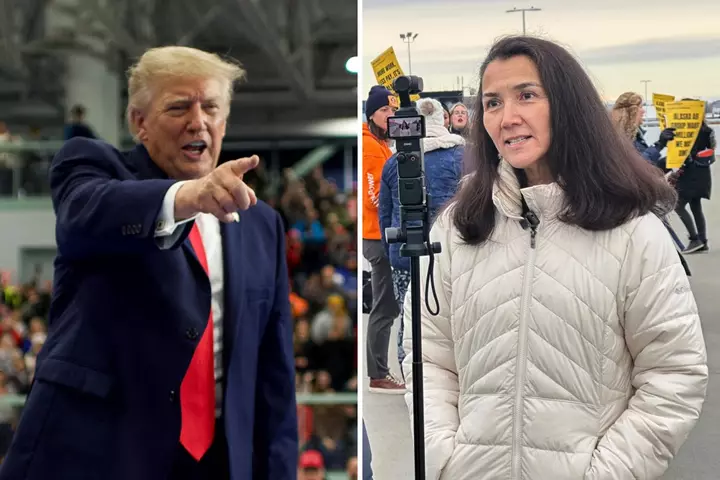
Democrat Mary Peltola says efforts to label her as a liberal are intended to distract Alaska voters from rising gas prices, affordability concerns, and foreign policy issues. As Peltola seeks to unseat Republican Senator Dan Sullivan in a state President Donald Trump carried by 13 points in 2024, political analysts have told Newsweek the central challenge facing her campaign is convincing voters to separate her from a Democratic Party that remains unpopular with many Alaskans on the right. The Alaska Senate race has become a test of a question analysts, pollsters, and politicians alike are watching nationwide: Can a Democrat win in a Trump state by campaigning as an independent-minded local candidate, rather than a national party figure?
Speaking to The Wednesday, Peltola said she was "not liberal or radical," adding that she wants to work with Alaskans regardless of party. "Peltola needs to differentiate herself from the national Democratic Party in order to attract enough normally Republican-leaning voters to gain a majority in a traditionally red state," David Hopkins, a politics professor at Boston College, told Newsweek Thursday. "She has invested in creating a political persona as a native Alaskan who understands the unique needs of her state and can represent its interests in Washington even when these interests run counter to the agenda of the liberal wing of the national Democratic Party." While Peltola has pulled ahead in recent polling, she likely needs independent and Republican support if she is to comfortably secure the senate seat November 3, and she appears to understand this in her messaging out on the campaign trail.
"As a military mom, a fisherman, and a lifelong Alaskan, Mary knows the struggles Alaskans are facing because she’s lived them. While Dan Sullivan enriches himself and his Lower 48 special interest donors who are jacking up prices on Alaska families, Mary is fighting to lower costs, restore our fisheries, and put Alaska first." Her Alaskan identity has been a core part of her messaging, focusing on her love of fishing, and the understanding of life being different in the state compared to the Lower 48. That latter message has been emphasized in her criticism of Sullivan and the idea that those in Washington, D.C., are failing to deliver for rural voters.
Overall, her message does not really focus on the wider Democratic Party's messaging from recent years. Her policies focus on affordability, "fixing the rigged system," and keeping promises made to veterans and service members. "Openly distinguishing herself from both major parties while accusing Sullivan of being a reflexive partisan is a way for her to court independent voters who have mostly soured on the performance of the Trump administration but also dislike the Democratic leadership in Washington," Hopkins said.
By contrast, Sullivan and the White House have focused on emphasizing the senator's and administration's record, largely tied to the president. In a release issued after Trump's visit to Alaska earlier this week to rally for Sullivan, the White House laid out the investments being made in Alaskan industries, as well as military spending and tax cuts. The message followed a similar trend to elsewhere across the U.
S.—that voters face a choice between "America first" policies or Democratic policies of the Biden era. Nate Adams, Sullivan's campaign’s spokesman, told Newsweek on Thursday that Peltola had spent the campaign "running away from her own liberal record, but she will never be able to hide from the fact that in Congress, she voted with Joe Biden and Democrats 95% of the time and sold Alaska out time and time again. "If she’s successful, her very first vote in the Senate will be to empower Chuck Schumer and the same liberal D.C.
Extract — continue reading at the source.