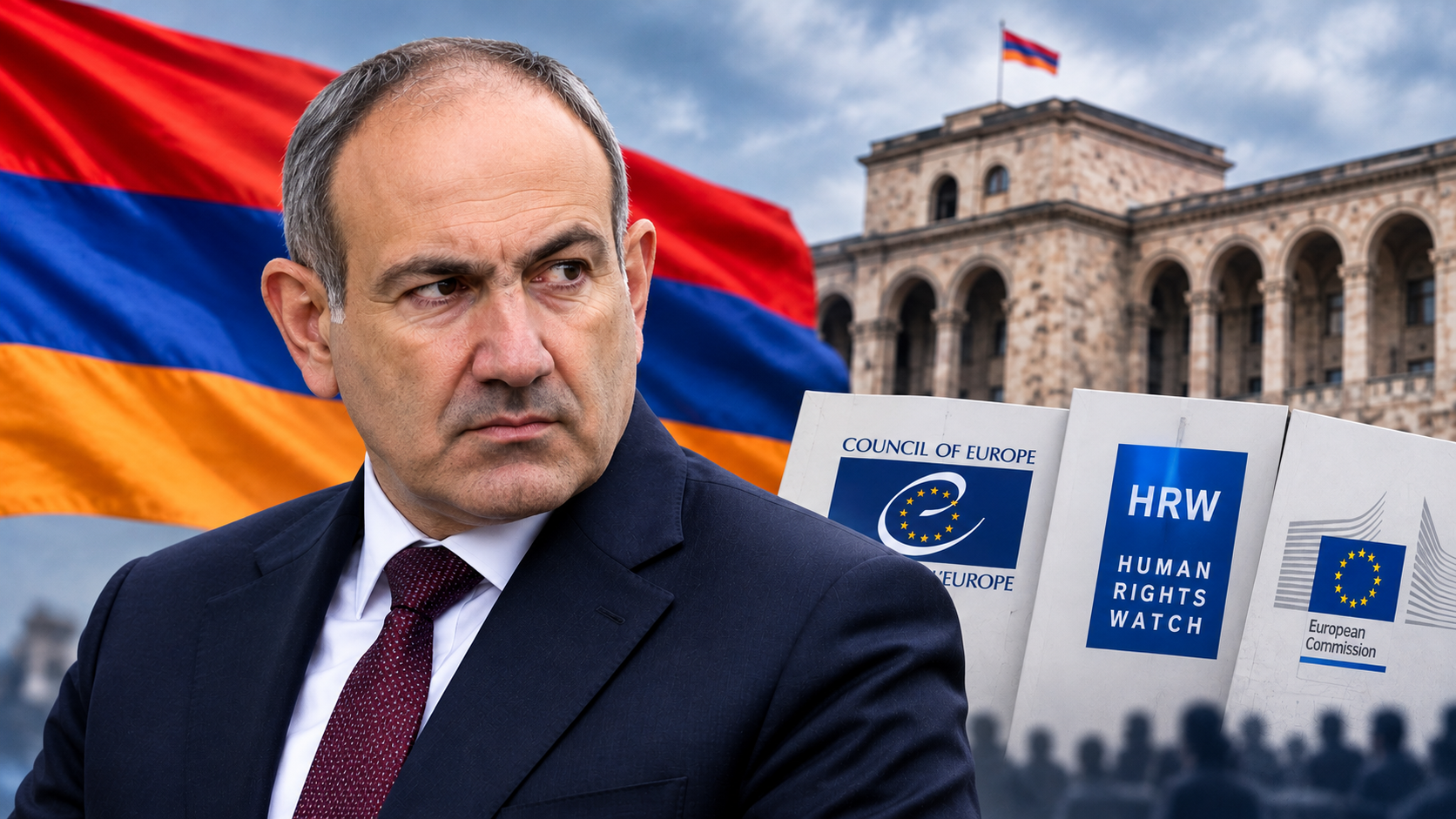
Political history has a habit of repeating itself, sometimes with striking similarities between leaders who emerge from revolutionary movements promising democratic renewal and those who eventually find themselves accused of undermining the very principles that brought them to power. Nikol Pashinyan’s rise during Armenia’s 2018 Velvet Revolution was presented as a turning point in the country’s post-Soviet political development. His promises of democratic transformation, accountability and a break with entrenched political interests helped mobilise a society frustrated by corruption and the concentration of power.
Yet, several years later, the image of Armenia as a democratic success story has become considerably more complicated. International monitoring organisations are increasingly drawing attention to weaknesses in its institutions, raising questions about the distance between Pashinyan’s original promises and the realities of his government. There is an uncomfortable historical parallel with Maximilien Robespierre, one of the central figures of the French Revolution.
The comparison is not intended to equate the two men or their political circumstances. Rather, it illustrates a recurring historical dilemma: movements that promise liberation and democratic renewal can find themselves accused of concentrating power and restricting political freedoms once they assume office. In Armenia’s case, however, the debate requires a closer examination of the circumstances in which the government has come under criticism.
The question is not simply whether Pashinyan has consolidated political authority or whether opposition figures and religious leaders have faced criminal proceedings. It is also necessary to establish why particular individuals have been arrested, what allegations have been brought against them, and whether the authorities have respected judicial independence and due process. The distinction matters because Armenia is undergoing a difficult political transformation at a particularly sensitive moment in its regional history.
Its government is attempting to normalise relations with Azerbaijan and Türkiye, advance a peace settlement, open regional communications and move towards a different security and economic architecture in the South Caucasus. These objectives have encountered resistance from political and other influential circles that oppose the direction of the peace process. This does not mean that every government action against its opponents should be regarded as justified.
Nor does the pursuit of regional peace give the authorities a licence to disregard fundamental rights. But neither should every prosecution involving a political or religious figure automatically be interpreted as evidence of authoritarianism without examining the allegations, evidence and judicial procedures involved. International assessments nevertheless present a worrying picture of Armenia’s democratic institutions.
Extract — continue reading at the source.