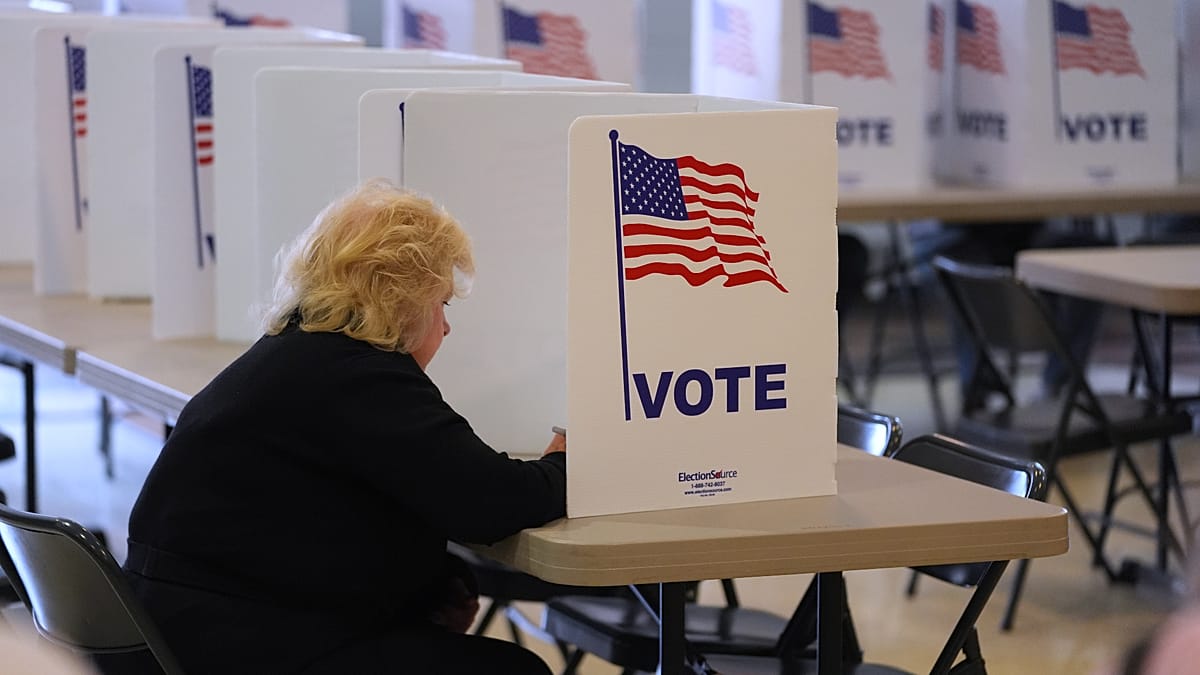
Polling stations are opening across the United States in a midterm election that, a year ago, Republicans expected to survive with their Senate majority intact. That expectation has been reduced to a hope. Start with the House of Representatives, where the question is no longer whether Democrats win, but by how much.
Prediction markets give them a 95% chance of taking control. The Cook Political Report now rates 222 seats as at least leaning Democratic, four more than the 218 needed for a majority, against 195 for Republicans, with 18 pure toss-ups. A good night for Democrats could see them controlling as many as 230 seats.
A great night means the Senate and a blue wave. Republicans hold 53 of the Senate's 100 seats. To take control, Democrats need a net gain of four.
Three is not enough: in a 50-50 Senate, Vice President JD Vance casts the tie-breaking vote, just as Kamala Harris did a record 33 times as vice president; however, Senator John Fetterman, the Democrat from Pennsylvania, could muddle certain partisan votes in a 50-50 Senate. Prediction markets now give Democrats roughly a three-in-four chance of winning the Senate. Cook rates six races as toss-ups, all of them held by Republicans.
The battleground covers 12 seats. Democrats are defending three: Michigan, Minnesota and New Hampshire. Republicans are defending nine: Alaska, Iowa, Kansas, Maine, Nebraska, North Carolina, Ohio, South Carolina and Texas.
Two of the three Democratic seats look safe. In Minnesota, Peggy Flanagan leads Michele Tafoya by 5.2 points in the RealClearPolitics average. In New Hampshire, Chris Pappas leads former Senator John E.
Extract — continue reading at the source.