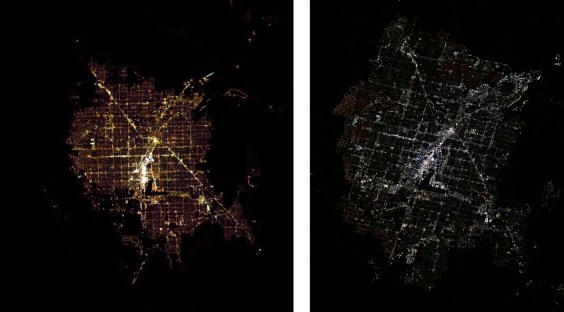
Over the last 15 years or so, there’s been a huge shift in the way our cities are lit—and NASA astronaut Don Pettit has the photos to prove it. Pettit has spent almost 600 days in space snapping images of metropolitan areas to document the global shift from orange sodium vapor lighting to white LED (light-emitting diode) lamps. And he’s now put together a thread on X (via PetaPixel) showing before and after comparisons for cities including Miami, Chicago, Las Vegas, Seoul, São Paulo, Hong Kong, and Mexico City.
The differences are stark. The old orange tint to street lighting was due to the technology that prevailed more than a decade ago. Electricity passed through sodium vapor, which gave off a strong, yellow-orange glow so everything would take on a particular sepia tinge at night.
Then LED technology arrived, specifically the blue LED needed to turn everything white (the discovery won the Nobel Prize in Physics). Cities soon started to switch, because LED lights last longer and use less energy, benefits for both city budgets and the environment. That’s not to say the change was met with universal approval at first.
There were plenty of complaints from city residents that the LED lighting was too bright, disrupting sleep and giving a sterile feel to the environment. But over time, the brightness of the lighting has been dialed down and made warmer. Despite that brightness reduction, there continues to be a problem for astronomers—the night sky keeps getting brighter.
While LED isn’t inherently brighter than sodium vapor on a strict one-to-one lamp comparison, LED lighting is now so cheap that there’s much more of it, and conurbations continue to expand. That said, you’ll still see amber LEDs used around Dark Skies projects and certain nature reserves. All of this is captured in the photos posted by Pettit.
From the grid street layout of Chicago to the mix of warm and white in Buenos Aires, it’s one of the most dramatic shifts in technology we’ve seen this century—and a reminder of the different perspective that being in orbit offers. Subscribe to our free newsletter.
Extract — continue reading at the source.