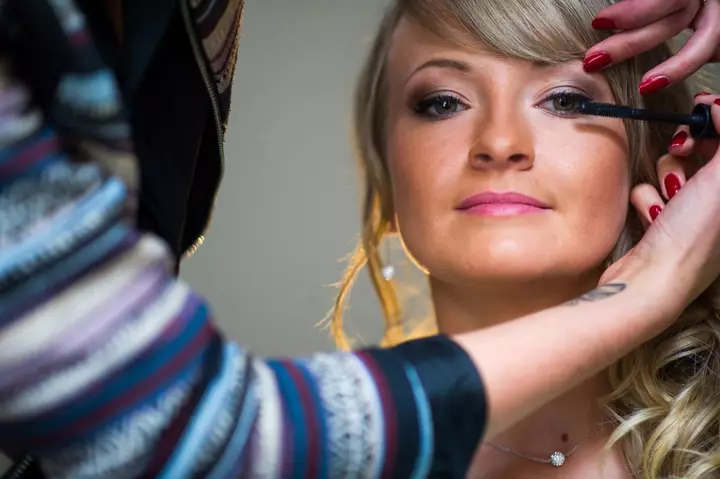
From TikTok tutorials and Instagram creators to online theory courses and AI-assisted instruction, aspiring beauty professionals have access to more information than ever before. In the United States, employment of barbers, hairstylists and cosmetologists is projected to grow 7 percent between 2025 and 2035, generating about 80,300 job openings each year, according to the U.S. Bureau of Labor Statistics.
At the same time, some industry leaders are rethinking how future professionals are prepared for those careers. While digital tools can expand access to education, there are employers who continue to value workplace experience, communication skills and professional judgment. "Digital learning is reshaping beauty education, giving schools new ways to reach students without compromising the hands-on training that's essential to the profession," Corina Santoro, vice president and general manager of Milady, a provider of textbooks and digital learning tools for beauty schools, told Newsweek.
According to Santoro, digital learning across Milady's customer base has grown by nearly 87 percent since 2019. Four in 10 schools now offer hybrid programs, while use of independent distance education, which allows students to complete theory coursework on their own schedules, nearly doubled between 2024 and 2025. Self-paced study can help students fit coursework around jobs, family commitments and other responsibilities while making education more accessible.
"The goal isn't to replace time spent learning techniques or working with clients. It's to give students more flexibility in how they build foundational knowledge so they can make the most of their hands-on instruction." Artificial intelligence is becoming part of that model as well. Santoro said AI-powered learning tools can help students reinforce concepts and work through questions outside scheduled class time while leaving educators responsible for practical training and professional development.
Digital learning may be changing how students acquire knowledge, but industry discussions are increasingly focused on what happens after graduation. "There is a distinct move towards creating business-ready junior staff," Millie Kendall, chief executive of the British Beauty Council, told Newsweek. While professional qualifications remain important, she said employers are increasingly looking for candidates who can adapt to workplace expectations and contribute to a business from an early stage.
"Work experience has become a vital way for people to enter the industry. Not only because of the contacts they can make but the real-life experience this delivers." However, Kendall does not view digital skills and workplace readiness as competing priorities. Instead, she argues that digital literacy now sits alongside technical ability and client-facing experience as part of a modern beauty professional's skillset.
Extract — continue reading at the source.