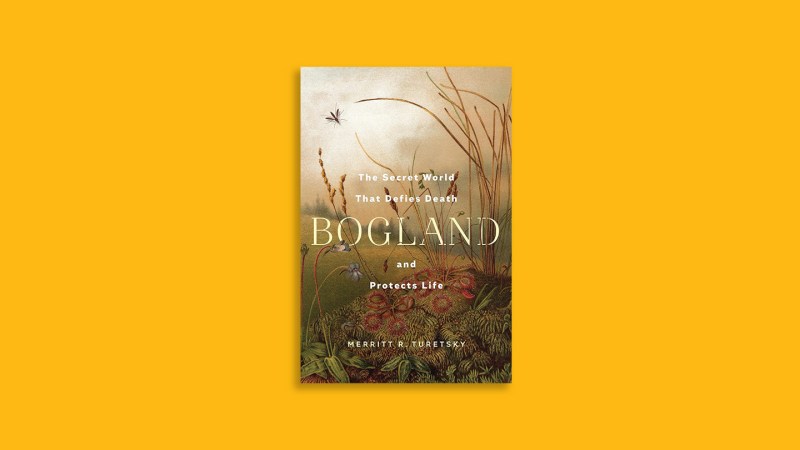
Norton & Company, $29.99 Thank goodness Merritt Turetsky became captivated by boglands. The ecosystem ecologist evocatively describes the beauty, danger and vitality of these ecosystems in her book, Bogland. Their soggy, oxygen-starved conditions make it difficult for microbes to break down organic matter, allowing carbon-rich peat to form.
It’s that peat that sets boglands apart from all other ecosystems, she writes. Boglands primarily consist of bogs and fens (and sometimes marshes and swamps). Bogs derive their water from precipitation, are lacking in nutrients and are known for sphagnum moss and carnivorous plants such as sundew and pitcher plants.
Fens, in contrast, get their water from streams and groundwater as well as rain. Because fens have access to more nutrients, they support more diverse plant communities. Anytime Turetsky dove into her own adventures in boglands, I was transfixed.
It’s in these moments — trying to stay calm amid insect swarms, reaching her arms deep into the murk and wading through muck with other devoted scientists — that the book shines. Turetsky’s bug baptism occurred on a college trip to a Nova Scotia bog as hundreds of mosquitoes, black flies and other insects quickly descended around her netted head. The sounds “are seared deep into my memory,” she writes.
The group enters the waist-deep water, moves through a rehabilitated area, then reaches a healthy peat swamp. This secret garden, Turetsky writes, “is pure pitcher plant heaven — unlike anything in my northern bogs, with layers of pitcher plants not only growing on the ground but dangling from the trees.” The colors and shapes she describes reminded me of something Dr. But along with their beauty and wonder, boglands harbor potential danger.
Turetsky recalls getting lost when she ventured out alone to check something in a study plot. Turetsky’s devotion to boglands celebrates the contradictions in these ecosystems: Filled with decay but teeming with life; places of refuge and risk; an ally in a changing climate as well as a potential foe. Peatlands occupy just 3 percent of the world’s land area but store around 30 percent of Earth’s soil carbon, Turetsky writes.
Extract — continue reading at the source.