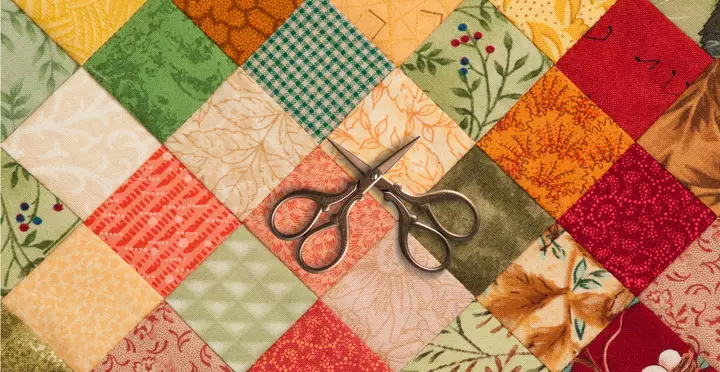
At first glance, belonging to a calligraphy guild or attending a quilting circle may seem like the very definition of apolitical activity. A handful of people gathering in a library conference room or church fellowship hall to have a potluck dinner and practice calligraphy flourishes or learn how to stitch seams in a hand-knitted sweater—what could be less consequential to the massive, convoluted problems of our world? And yet, as our democratic institutions are challenged, getting off social media and showing up in body, mind, and spirit at such gatherings may be among the most quietly radical practices we can engage in during this time.
To gather with people offline and outside of our typical professional or family and friend groups around a shared hobby is to affirm that freedom is not only about rights and laws; freedom is about the ability to assemble, create, and find joy. To take up a nib or a needle in public is to resist isolation, to insist on connection. It is to plant a flag of freedom in the soil of our everyday lives.
Identifying and pursuing our pleasures and hobbies help us remember that we are more than workers and consumers. When we step outside the privacy of our homes and meet others in such shared pursuits, we encounter people we might otherwise never cross paths with: an engineer alongside a poet, a blue-haired teenager alongside a purple-haired retiree, a fire chief alongside a wedding calligrapher. In these spaces, we are in a dress rehearsal for democracy.
We exchange tips; we share materials; we admire one another’s efforts; we try and fail; and we try and fail again. We build trust not through argumentation but through making. Calligraphy, quilting, knitting, watercolor painting, pottery—these are not only hobbies but ways we are coming together to practice for a larger civic life.
They remind us that our hands are capable of shaping, not just scrolling. They remind us that culture doesn’t only arrive prepackaged on screens but is made, here and now, within communities of care. In an age when artificial intelligence can churn out paragraphs in seconds, the slow work of identifying hobbies we enjoy and showing up to do them with other people we may not know matters more than ever.
Assembling in public spaces to learn our hobbies or form or join existing guilds teaches not only patience and attention but how to have relationships. Freedom is the presence of choice, play, and our full-bodied imaginations. If we want future generations to inherit not just our technological innovations but also our shared humanity, we must keep gathering outside the privacy of our homes in these circles formed by shared love of ink, thread, paint, fabric, stencil, and clay.
Extract — continue reading at the source.