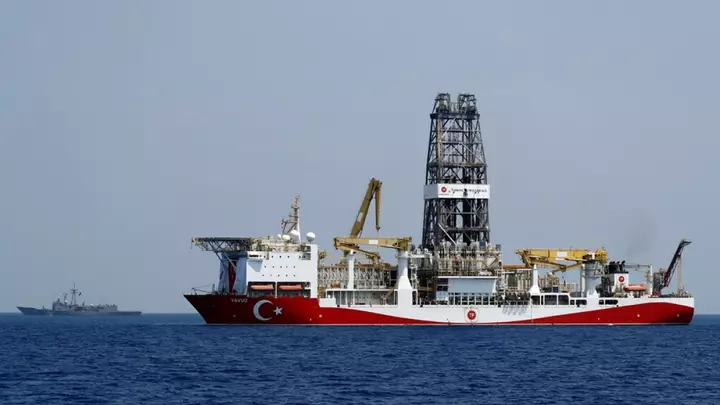
Istanbul, Turkiye – Once adversaries, Turkiye and the leadership of eastern Libya are now building closer political and military ties. Ankara has also repaired relations with Egypt in the past few years after previous hostility, but a maritime dispute is testing how far those reconciliations can go. On Wednesday, Turkiye’s Ministry of National Defence renewed its offer to sign a maritime boundary agreement with Cairo, arguing that Egypt could gain more than 15,000sq km (5,790sq miles) of maritime jurisdiction – a figure that is Ankara’s estimate – compared with a potential further agreement with Greece, with which Cairo signed a partial maritime deal in 2020.
The offer came eight days after Libya’s eastern-based parliament in Tobruk reversed years of opposition and approved a maritime agreement signed between its rival, the internationally recognised government based in the Libyan capital, Tripoli, and Turkiye in 2019. The agreement delineates maritime jurisdiction areas claimed by Turkiye and Libya in the Mediterranean, but Greece, Cyprus and Egypt argued that it infringes on their sovereign rights while Turkiye maintains that it complies with international law. A senior Turkish official told Al Jazeera that eastern Libya’s leaders had come to recognise Ankara’s intentions.
Turkiye helped repel a 2019-2020 offensive on Tripoli by forces loyal to renegade military commander Khalifa Haftar, leader of the military forces of the eastern government. Ankara has since expanded its relations with the eastern camp while maintaining ties with Tripoli. The senior official said Turkish security personnel based in Tripoli had remained in contact with eastern Libyan forces even during the confrontation.
Only the results it has produced have changed,” the official said. The diplomatic outreach has been accompanied by military and intelligence contacts. In May, Defence Minister Yasar Guler met Saddam Haftar, Khalifa Haftar’s son, and Abdulsalam al-Zoubi, a senior defence official in the Tripoli-based government.
Turkish intelligence chief Ibrahim Kalin also met Saddam Haftar in Benghazi on June 23. Foreign Minister Hakan Fidan followed in August, meeting both Khalifa and Saddam Haftar. A change in Libya’s eastern parliamentary leadership also preceded the maritime vote.
On October 6, lawmakers replaced Aguila Saleh as parliament speaker with Al-Salhin Abdelnabi al-Obeidi, who previously chaired the Libyan-Turkish parliamentary friendship committee. Galip Dalay, a senior research fellow at Chatham House, sees Ankara’s engagement with its former adversaries as a strategic gain. It is a strategic gain for Turkiye,” he told Al Jazeera.
Extract — continue reading at the source.