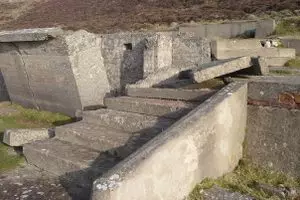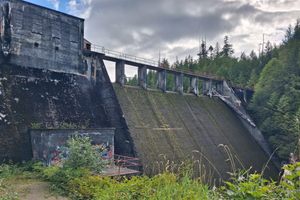
Once a vital asset for Southeast Alaska’s timber industry and the backdrop for the gritty 1954 film noir classic Cry Vengeance, the Connell Lake dam now stands as a tragic yet scenic barrier blocking vital fish passage. The Connell Lake dam is an imposing, almost gothic structure. Weather-worn and cracked in places, it blocks fish passage on Ward Creek.
Frequently flagged by federal agencies like NOAA Fisheries, the dam cuts off miles of vital fish habitat. In 1954, the dam served as the backdrop for the climax of the film noir _Cry Vengeance_. A gun battle took place on top of the dam, and a dummy was thrown over the side to simulate the villain's death—a movie that can now be viewed for free online.
This site offers a glimpse into the grittier industrial past of Alaska and the complex history of the Tongass National Forest. It once supplied millions of gallons of fresh water through a wooden-stave pipeline, portions of which are still visible decaying near the structure. The nearby pulp mill operations were also part of a broader reckoning featured in the March 1988 _Sports Illustrated_ article "The Forest Service Follies," which exposed heavy subsidization and ecological strain in the Southeast Alaska timber industry.
Several trails start at the parking lot near the dam. Visitors can follow the old pipeline corridor down toward the mill site, loop around the lake, or follow Ward Creek back toward Ward Cove. Get more unusual and extraordinary places each week with the Atlas Obscura Places newsletter.
Your newsletter subscriptions with us are subject to Atlas Obscura's Privacy Policy and Terms of Use. 6 miles north from downtown Ketchikan on the Tongass Highway to Ward Cove, turn right onto Revilla Road for a little over 2 miles, and then turn right onto Connell Lake Road just past the Last Chance Campground. The parking lot is level and well maintained. It is a favorite hiking spot with locals.
Two sections of the old dam that made it possible to tame the Meuse in Belgium in the 19th century. This dam is part of the nation’s largest public power producer and a historic steward of Hiwassee River. The ruins of a failed dam that was built over land later described as a "sponge." The tallest stone dam in Poland was opened by Kaiser Wilhelm II himself.
Extract — continue reading at the source.