In 1345 the English book lover Richard de Bury described the libraries and booksellers of Paris, medieval Europe’s great center of learning “as more aromatic than stores of spicery.” In Bury’s Philobiblion, a celebration of all things bookish, he described reading as sweetening the belly of one’s memory. Collecting books was akin to gathering “sweet-smelling flowers.” The knowledge obtained from them would allow you to shed a perfume of learning like a panther, which, according to medieval writers, “all other Beastes love and follow…for his sweete smell.” Ideas about the scented nature of knowledge could be found across the medieval world. The Persian polymath Al-Ghazali compared those who collected and shared ideas to “a pot of musk which is full of fragrance and gives fragrance to others.” Yet philosophers from the Greeks onwards might have found the idea of fragrant learning fanciful at best, and misleading at worst.
Intellectual luminaries ranging from Aristotle to Hegel and beyond have argued that human noses are prone to prejudice, insensitive compared to those of other animals, and therefore unreliable. Immanuel Kant was summarizing a set of long-held ideas when he argued that smell was ungrateful, dispensable, and more subjective than objective. It must have seemed to him that his fellow Enlightenment thinker Jean-Jacques Rousseau was damning with faint praise when he described smelling as the “sense of the imagination.” Smell might offer insight into the soft world of feeling, but it would broker no entry to the hard archive of rational facts.
In hierarchies of the senses, smelling was traditionally located either in the middle (between the distance senses of vision and hearing, and the proximate senses of touch and taste) or at the bottom (associated with animality, childishness, femininity, and racial others). Seeing, rather than sniffing, was the source of knowledge. That sniffy attitude has surfaced in satiric barbs directed at those whose bookishness was held to be all surface and no substance.
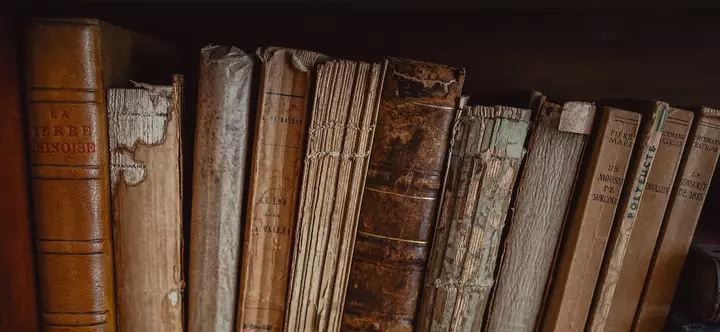
The seventeenth-century Frenchman Jean de La Bruyère mocked collectors and recalled almost fainting at the scent of a library full of untouched volumes bound in Moroccan leather. Seeking to bring the fashionable owner down a peg or two, La Bruyère compared the stink of the library to the proverbially foul smell of the tannery. Likewise, the Victorian dramatist Douglas William Jerrold satirized those who, amassing shelves of books that they subsequently left unread, believed that they could “take a good sniff” and breathe in the “aroma of learning.” In the early twentieth century the Japanese literary critic Uchida Roan compared bibliophiles to illiterate, book-eating insects who delighted in the “sweet scent of old ink.” When we lean in and sniff, we are plucking a book from the shelf and diving into the memories contained within.
Yet Bury has not been alone in evoking the perfume of erudition. In Chinese, the word shuxiang means both “knowledge” and “the scent of books.” In seventeenth- and eighteenth-century China, collecting books became a common pastime for the elite. The possession of a well-stocked library conferred considerable respectability.
A fine collection of books “perfumes the family line with the scent of ink,” but if “the fragrance of books dies, the family’s reputation will gradually fall into the base.” The scent of books symbolized an investment in learning and tradition. Perfume was no mere metaphor. The avid collector could distinguish the best manuscript by their scent.
Extract — continue reading at the source.