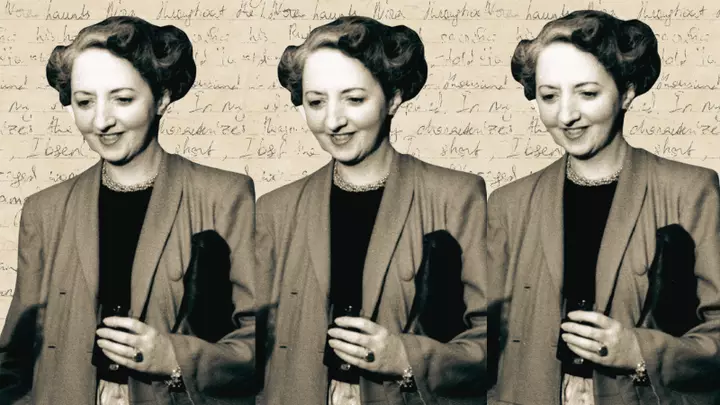
Manning’s best-known work, her “Balkan” trilogy inspired by her experience in Romania and Greece during World War II, was reissued by the NYRB in 2010 with a praiseful introduction by Rachel Cusk, but Manning would have wondered what took so long. About the same time that Cusk wrote this introduction, she was sued by some of her “people,” a family who recognized themselves in her memoir The Last Supper. Not noted in Cusk’s introduction to Manning’s Balkan Trilogy is that Manning also got in libel trouble over those same novels.
One of the terrible things about such an action is how it can compromise the work. The inconsistent censorship of Manning’s Balkan trilogy introduced an error into one of the novels that, for 60 years, appears to have gone unnoticed. If it had been noticed, Manning would have complained about it.
Manning’s three Balkan novels are her most acclaimed, though one contemporary reader told her that in a semi-autobiographical novel “it is just so easy to put down what happened.” But Manning always pulled from life. A prim, petty matron in her 1951 School for Love was inspired by Robert Graves’s sister Clarissa, but where Clarissa was tall, Manning made her character short. Clarissa nonetheless noticed and considered a lawsuit.
Manning’s friend, the poet Steve Smith, wrote a “bitchy review” of Manning’s The Doves of Venus, after finding a character much like herself in its pages: neurotic, and terrified of the dentist. This despite Manning changing Smith’s height. Manning’s husband, Reggie Smith (no relation to Stevie), once cautioned: “You may be able to pull the wool over the eyes of the Sunday Times readers, but there will always be those who know the truth.” In 1967, Manning finally heard from somebody’s lawyers.
In the first two books of her Balkan Trilogy, The Great Fortune (1960) and The Spoilt City (1962), Manning had referred to the 1939 assassination of Armand Cǎlinescu, the Romanian prime minister, by Romania’s fascist Iron Guard. Manning and her husband were in Romania when it had happened. Drawing as she often did from real life, Manning described Cǎlinescu’s death, and how, a year later, each member of his surviving family were “taken to the nearest large town and shot in the marketplace.” The original assassination was implied to have been done for the benefit, or with the participation, of Romania’s King Carol: “You never heard that the King said… ‘I’ll get that bastard Cǎlinescu if it’s the last thing I ever do’?” But in fact Cǎlinescu’s family had not been shot in the streets, and his son, Barbu Cǎlinecsu was living and working in Cambridge, as an architect.
The younger Cǎlinecsu was “libelled and deeply damaged by things said about his family and father” in Manning’s novel. For one thing, the claim that King Carol supported his father’s assassination was baseless. But his biggest concern, as it was told to Manning’s publishers, Heinemann and Panther, that if its description of events were to be taken by a reader on good faith, they would conclude that Barbu Cǎlinescu was murdered in Romania after his father, and therefore that the Cambridge architect with the same name was “a liar and imposter.” Barbu Cǎlinescu sought not just damages but to have the two novels withdrawn from print and for Manning and her publishers to publicly apologize.
Extract — continue reading at the source.