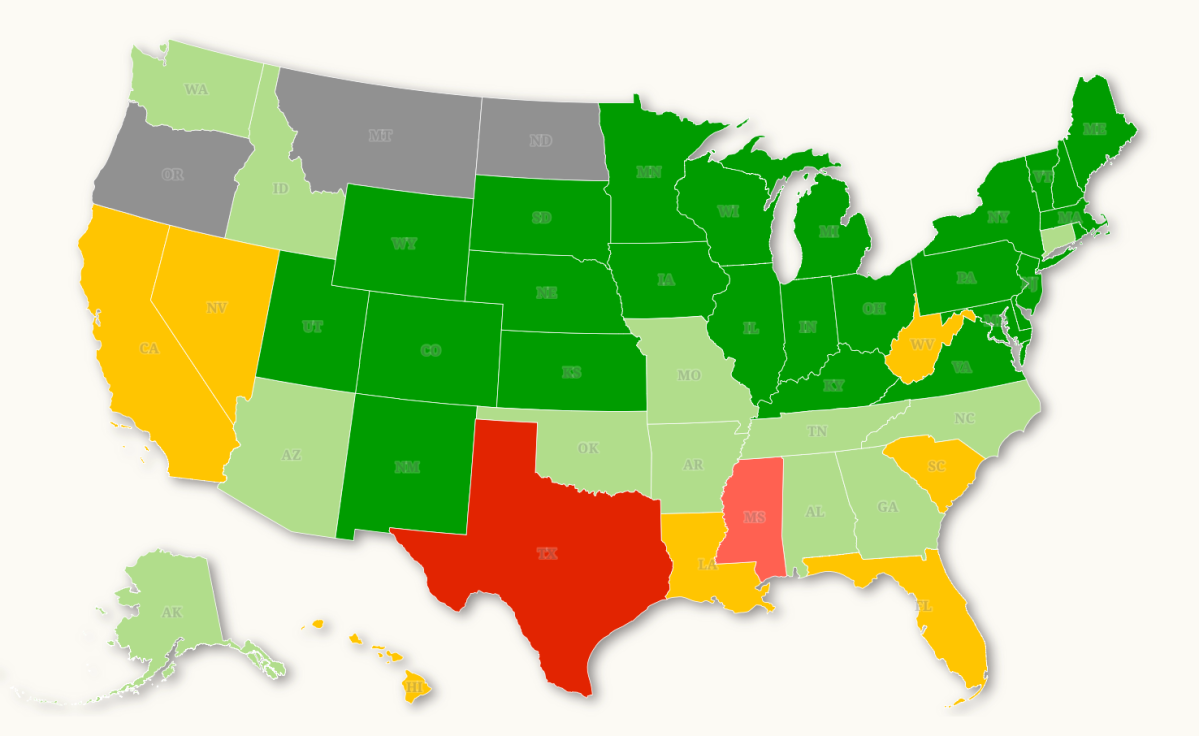
COVID-19 infections are rising across much of the U.S. as students return to classrooms, with federal numbers revealing widespread transmission growth and outbreaks that have already disrupted some schools. The Centers for Disease Control and Prevention (CDC) estimates that, as of August 26, COVID-19 infections are growing or likely growing in 49 states, while none are declining. The exception is Iowa, which does not have sufficient data, according to the CDC.
The findings do not mean COVID activity is rising equally everywhere, and the CDC cautions that its epidemic-trend measure shows infections increasing or decreasing, not how many infections are occurring or how severe the burden could be on systems. The increase comes as millions of children return to school and wastewater surveillance has identified more pronounced COVID activity in several parts of the country. The increase has already affected a small number of schools.
Last week, San Perlita Independent School District in South Texas temporarily canceled classes after officials described a “rapid spread” of COVID-19 within the district. The closure came shortly after Park Ridge Achievement Academy in Louisiana also temporarily shut down following a COVID outbreak affecting students and staff, according to the same report. The incidents remain isolated rather than evidence of widespread school closures, but they show how concentrated outbreaks can disrupt individual schools even when national levels of serious illness remain relatively low.
The CDC's latest wastewater data, updated August 28, shows elevated SARS-CoV-2 activity in several states, with Texas at a very high level and Mississippi at a high level. California, Florida, Hawaii, Louisiana, Nevada, South Carolina and West Virginia were among the states that registered moderate activity. As of August 28, the CDC said national and regional COVID-19 activity was increasing, although the overall number of acute respiratory illnesses causing people to seek health care remained very low.
The agency’s latest wastewater surveillance also showed sharply different conditions between states, including very high COVID-19 wastewater activity in Texas and high activity in Mississippi. In Texas, 3,105 confirmed and probable COVID-19 cases were reported during the week ending August 22, up 54.2 percent from 2,014 a week earlier, according to the Texas Department of State Health Services. The state cautions that COVID case reporting has been voluntary since March 2024, meaning the figures do not capture every likely infection.
Mississippi does not publish a comparable current case count, but [state health department surveillance] shows COVID-like illness visits to participating hospitals and clinics rising sharply during the summer. Weekly visits had climbed to roughly 750 by mid-August, about three times the level seen around the beginning of July. Elsewhere, the Virginia Department of Health said on August 25 that COVID activity "is low but is beginning to increase." Diagnosed COVID accounted for 0.6 percent of emergency room and urgent-care visits during the week ending August 22—three times the proportion seen in mid-July—and there have been spikes in the amount of SARS-CoV-2 (the virus that causes COVID-19) detected in wastewater.
Extract — continue reading at the source.