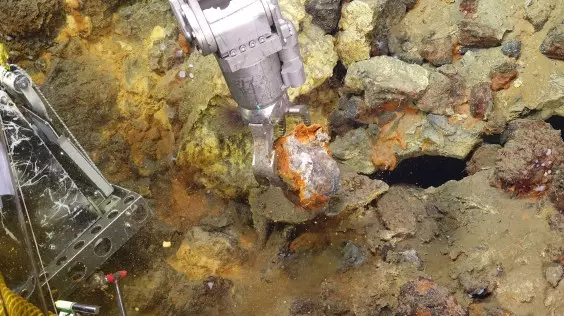
Deep-sea mining may still be in its infancy, but scientists and environmentalists are already raising the alarm about the risks. Seafloor massive sulfides that form around hydrothermic vents are rich with valuable metals like copper, gold, silver, and zinc. They’re also home to unique ecosystems and fauna that can’t be found anywhere else on Earth (and definitely won’t survive an encounter with mining equipment).
Unfortunately, these deep-sea critters may be caught between red hot demand and dwindling terrestrial supplies (data centers in particular need plenty of copper). The International Seabed Authority, an intergovernmental body that regulates seabed mineral development in international waters, has already greenlit sulfide mineral exploration around two deep-sea ridges. The seldom seen life on the ocean floor might seem like an increasingly tempting sacrifice to mineral-hungry developers, but now there’s a new threat: The rocks themselves can explode.
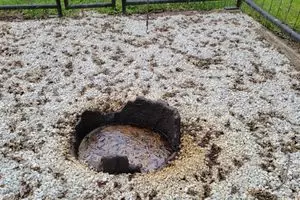
Read more: “The Dubious Economics of Deep-Sea Mining” According to a new Scientific Reports study by U.S. Geological Survey scientists, metal-sulfide rock samples extracted in 2022 from the Escanaba Trough off the coast of Oregon and California spontaneously combusted in the lab, reaching temperatures above 212 degrees Fahrenheit. These exothermic reactions occurred after two of the rocks were pulverized for study in the lab, so the team analyzed their chemical and physical characteristics to find out why.
According to the researchers, they were composed of nanocrystalline marcasite (a form of iron sulfide), which isn’t usually a hazard. Crystals generally tend toward forming the most thermodynamically stable shape, but the structure of these were slightly different and less stable. They also found that the metal sulfides produced more heat when they reacted with oxygen.
The findings mean that mining metal sulfides from the ocean might be a bit riskier than mining them here on land (from prehistoric seabed formations that are now above water). Changes in temperature, atmosphere, and pressure could alter their structures, making them more prone to exploding. Additionally, the researchers stress that the metal sulfides in each seabed formation may have different properties, requiring further study before mining can begin.
Deep-sea life may not be able to fight back against mining operations, but the rocks are a different story. Subscribe to our free newsletter. Lead Image: ROV Jason/Woods Hole Oceanographic Institute
Extract — continue reading at the source.