Psychiatric syndromes can be caused by underlying autoimmune encephalitis (AE). This represents a diagnostic challenge at the interface of psychiatry and neurology. While AE mostly manifests with a combined, complex neuropsychiatric syndrome, some patients with AE may (initially) present with predominant or isolated psychiatric symptoms.
These cases can be difficult to classify, and diagnostic approaches vary considerably across clinical settings. This paper from the GErman NEtwork for Research on AuToimmune Encephalitis (GENERATE) provides interdisciplinary expert recommendations from psychiatry and neurology for the diagnostic evaluation of patients with suspected AE as the cause of psychiatric syndromes for psychiatric care settings. It integrates current scientific evidence with practical, empirical considerations from routine clinical care in different healthcare settings.
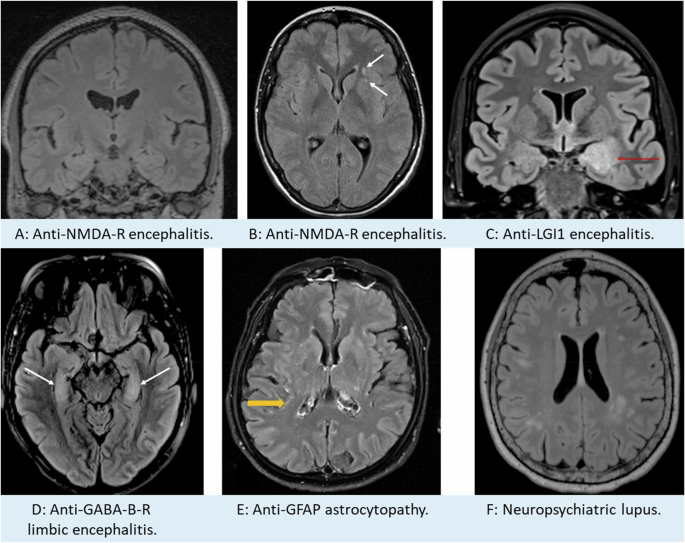
The proposed diagnostic approach to detect psychiatric manifestations of AE emphasizes a rational, stepwise evaluation incorporating clinical assessment, magnetic resonance imaging, electroencephalography, blood testing, cerebrospinal fluid (CSF) analysis, and neuronal/glial antibody testing in serum and CSF. In diagnostically ambiguous individuals, [¹⁸F]fluorodeoxyglucose positron-emission-tomography and advanced antibody testing (e.g., live-cell-based assays) or neuroimaging techniques (e.g., volumetric analysis) may provide additional supportive information. Typical findings and limitations of diagnostic modalities are discussed to facilitate appropriate interpretation and to avoid under-recognition or overdiagnosis.
Importantly, these recommendations do not aim to define new disease entities or diagnostic criteria, but rather to support a harmonized and pragmatic diagnostic approach to patients presenting with psychiatric syndromes suspected to be caused by underlying AE. Finally, key unresolved issues in this evolving field of immunopsychiatry are outlined, and promising research strategies are described. Autoimmune encephalitis (AE) has become a well-established group of inflammatory central nervous system (CNS) diseases [1].
Since the first description of anti-N-methyl-D-aspartate receptor (NMDA-R) encephalitis in 2007 [2,3,4], an increasing number of central nervous system (CNS; i.e. neuronal and glial) antibodies have been identified, many associated with characteristic clinical syndromes and, in some cases, defined pathophysiological mechanisms [5,6,7,8,9]. Clinically, AE is most often characterized by a subacute onset of neurological symptoms, e.g. seizures, movement disorders, altered consciousness, cognitive impairment, or focal neurological deficits. These symptoms are frequently accompanied or preceded by prominent psychiatric manifestations such as psychosis, behavioral changes, anxiety, or affective symptoms [1, 5, 10, 11].
International consensus criteria have been established and recently validated to facilitate the diagnosis of possible, probable, and definite AE and its major subtypes [5, 12, 13]. While most individuals with AE present with a mixed neuropsychiatric phenotype, isolated or predominantly psychiatric presentations have been reported, particularly in the early disease stages or as abortive phenotypes (i.e., with oligosymptomatic psychiatric features) [14]. For example, a proportion of patients with anti-NMDA-R encephalitis may initially or during a relapse present with purely psychiatric symptoms [15,16,17].
Extract — continue reading at the source.


