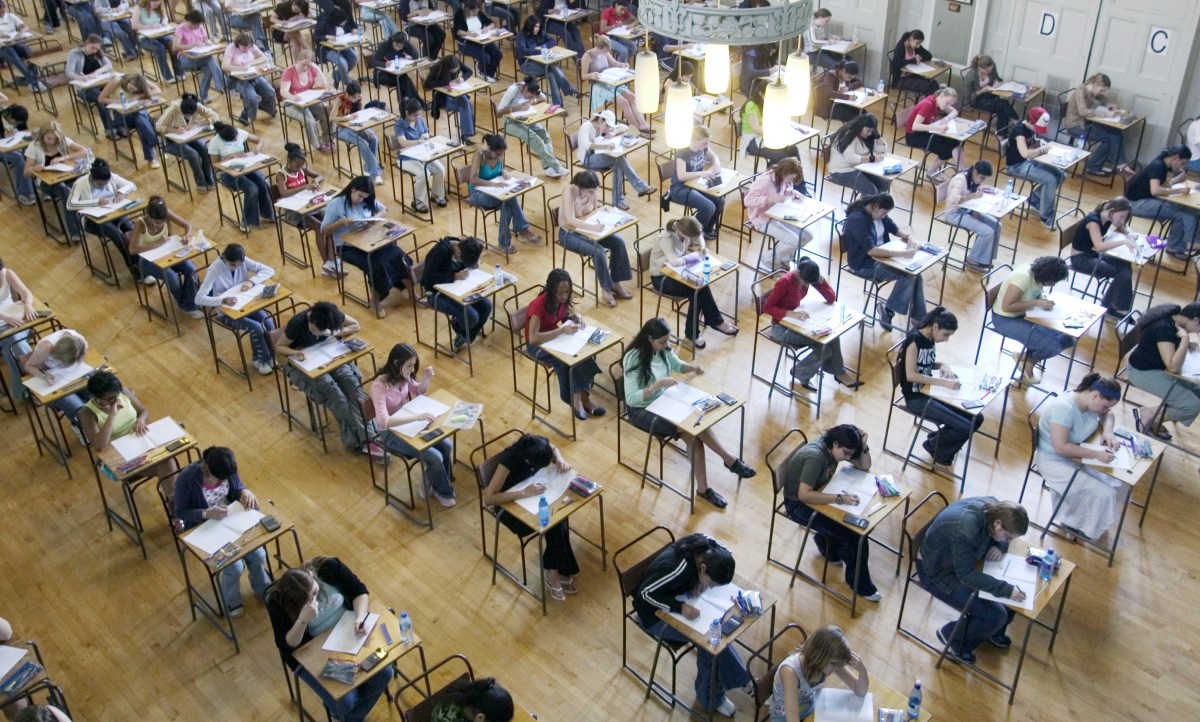
America’s education system is facing a fundamental question: Are students truly learning, or are they simply moving through the system? Recent academic performance data suggests that completing a grade level does not always mean students have mastered the skills they need. Average reading scores among U.S. high school seniors are at their lowest level since 1992, while math scores are at their lowest since 2005.
The Guardian reported that 45 percent of 12th-graders performed below the National Assessment of Educational Progress (NAEP)'s Basic level in math, while 32 percent performed below Basic in reading. These numbers represent more than a challenge with standardized testing. They raise a deeper concern about whether our education system is measuring the outcomes that matter most: understanding, confidence, problem-solving ability, and the capacity to apply knowledge beyond the classroom.
For decades, education has largely been structured around time. Students attend school for a set number of hours, complete assignments, earn credits, advance through grade levels, and eventually graduate. But time spent in a classroom does not automatically translate into mastery.
The question we need to ask is simple: What if education focused less on how long students sit in classrooms and more on what they are actually able to do? My work through the Abundant Minds Initiative is built around exploring that question. I believe students can achieve more when education is designed around how the brain learns, rather than only around institutional schedules and traditional structures.
One idea I have proposed is the “20 Minute School Day,” which is often misunderstood. The concept is not about eliminating the school day or reducing learning opportunities. Instead, it focuses on establishing a concentrated period of neuroscience-informed cognitive training as a foundation, allowing the remainder of the day to incorporate guided learning, mentorship, apprenticeships, exploration, and practical application.
The goal is not less education. It is more intentional education. Critics argue that schools already face significant demands, including state standards, literacy requirements, STEM instruction, and limited classroom time.
Extract — continue reading at the source.