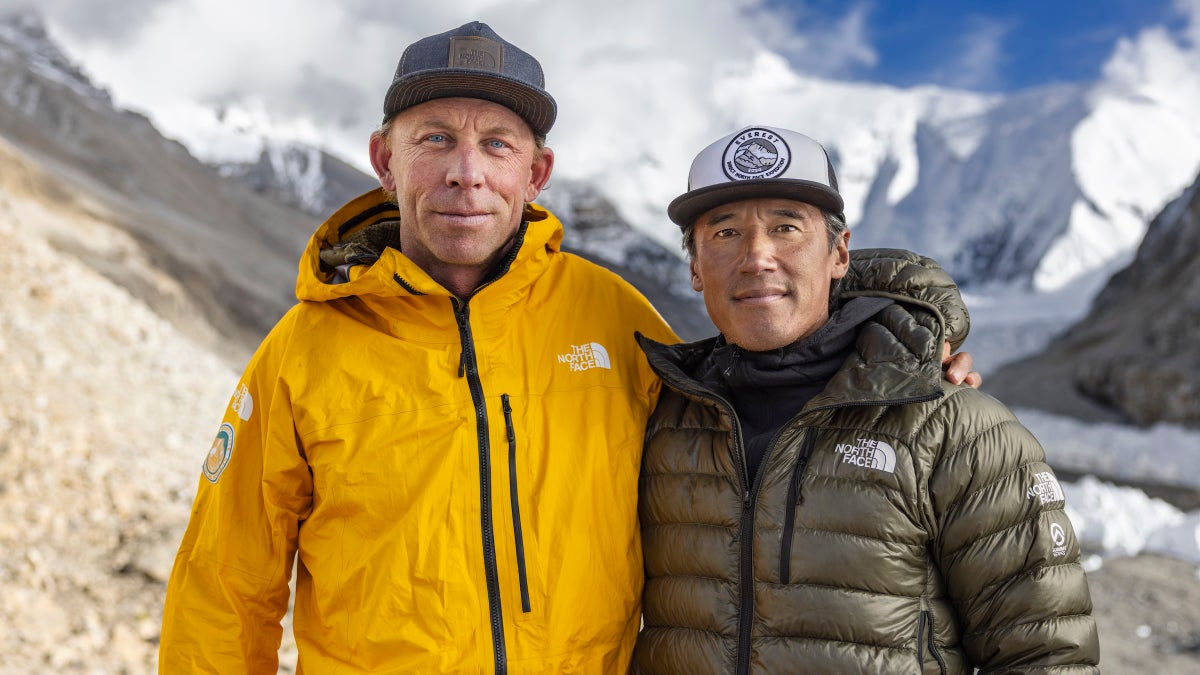
Just after 10:40 A.M. on September 26, 2022, ski mountaineers Hilaree Nelson and Jim Morrison clipped into their skis on the exposed summit of Manaslu, the eighth-highest mountain in the world. They were on the Nepali peak training for an even more audacious goal: skiing the direct North Face of Mount Everest, a descent no one had ever completed. Pemba Sherpa (Sharwa) was on the ridge filming them for the upcoming documentary, Everest: The Other Side.
Up there, at 26,781 feet, the wind tugged at a string of prayer flags secured to the peak. Nelson and Morrison were ski partners and life partners. They had matching outfits on: red ski boots, dark pants, red jackets, and white backpacks.
For Nelson, who’d spent her life making bold first descents around the world, high-altitude summits were where she made a living, but they also offered something else: a space where the boundaries between the physical and spiritual world blurred, where “you can almost reach through to the other side,” she says in the film. Morrison skied first, taking a few turns and pulling off to the side to wait. Nelson followed in his tracks, traversing across the small summit pyramid before pausing.
As she started to ski, the slope released above her, and the avalanche knocked her off her feet. It carried Nelson past Morrison and out of sight. After Nelson disappeared, an anguished sound came from Morrison.
Desperate to reach Nelson, Morrison started skiing. He recalled making risky moves above a large cliff band. Pemba screamed at him to stop.
He wanted to try to air through the cliffs after her, but knew it would probably kill him. To help her, he’d have to stay alive. That day, avalanches released all over the mountain, at different altitudes and different aspects.
Extract — continue reading at the source.