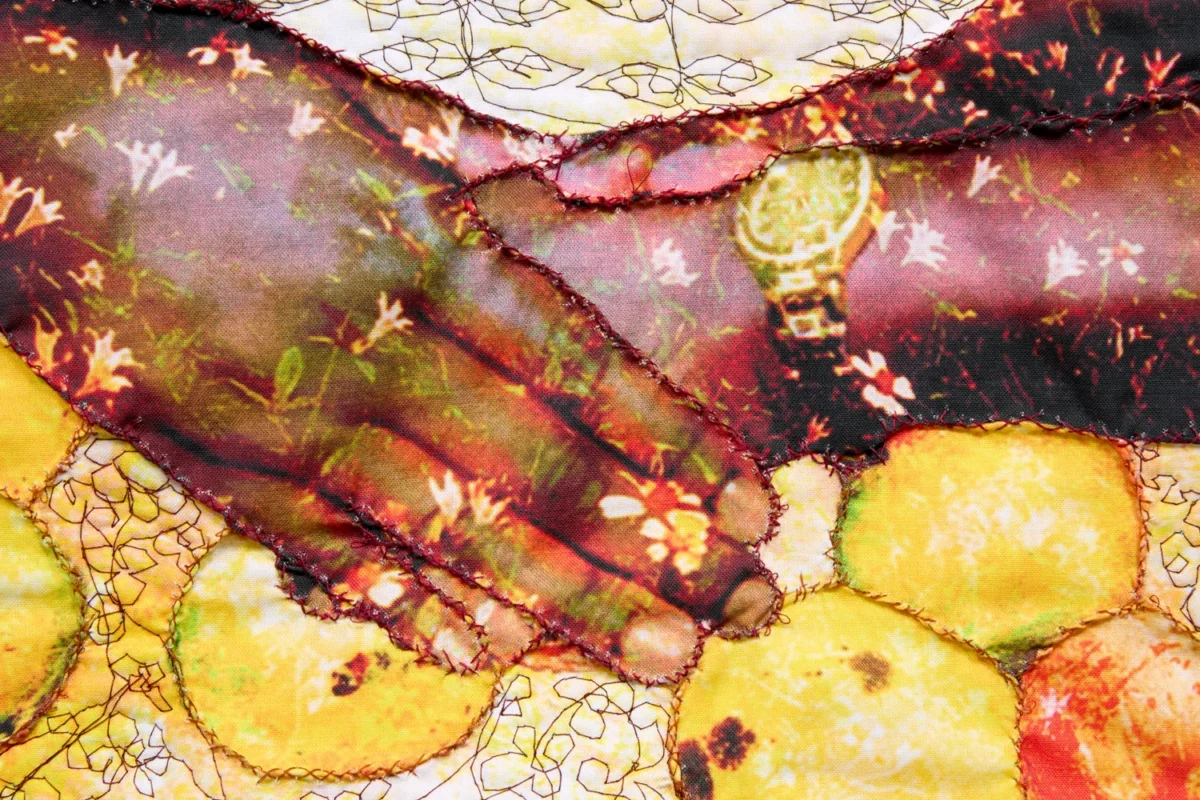
A son traces four versions of home across Ọkpọsị and Abakaliki, following the names through which he is recognised: those of his mother, father, grandparents, and the brother whose death preceded his birth. Written by Nwanne Agwu, “Faint Lines” maps identity through maternal and paternal lines, family photographs, and inherited stories. Published first in Isele Magazine, the story asks what it means to belong to the people who came before us, and reimagines home not as where one comes from, but as the experience of being seen with love. — Raaza Jamshed for Guernica Global Spotlights You check a dictionary and it says a name is a noun that indicates or identifies a thing or an idea.
You put a name in the place of a home, a skin you don’t choose at first but can get comfortable in. A cloth you can change if you want. Your name is the home you carry around, everywhere you go.
You think of home as where your parents call home. As where your siblings are. As a person; everyone you have loved was once your home.
You do not run to the dictionary to find the meaning of home because, in this one, home is just a place. Here, your mother is a toddler with mucus crawling down her nose. You say whose child you are, thinking that he must have known your mother.
That, maybe, he had also heard your mother’s first cries as a baby. This man, from whom your maternal uncles and aunts inquire the years of their unregistered births and the events your grandparents never talked about, looks at you and nods. You know your home, he says.
You look like where you come from. In Ọkpọsị, a person comes from, at least, two places: the maternal side and the paternal side. The two lines are the streams that form this river that could be anybody.
Extract — continue reading at the source.
/https://tf-cmsv2-smithsonianmag-media.s3.amazonaws.com/filer_public/d6/3a/d63ab0e1-1057-4fce-8f8c-c0ea8bb2ea6e/a_1-fused-groups-of-anglo-saxon-coins-found-in-recent-excavati-95fcea8df7df53c8c8b6485cc9f1e443.jpg)

/https://tf-cmsv2-smithsonianmag-media.s3.amazonaws.com/filer_public/85/15/8515bbd0-d5ea-4316-9fa1-7358e578f9dd/nobel-physics.jpg)
/https://tf-cmsv2-smithsonianmag-media.s3.amazonaws.com/filer_public/94/be/94be7181-550d-4831-ac94-9672b56da5e3/formimagining_copy.jpg)