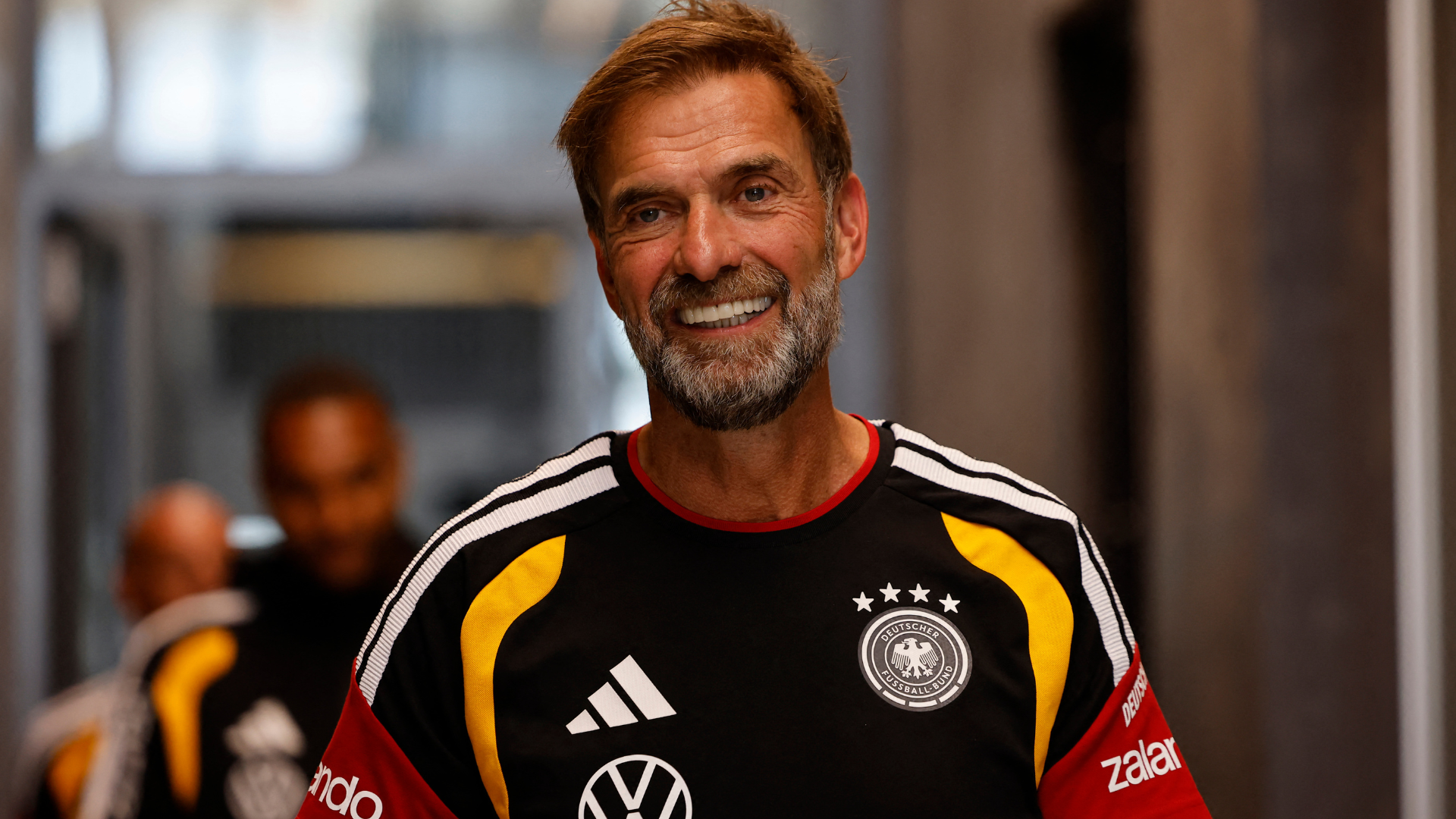
After failing to advance to the round of 16 in three consecutive World Cups since their triumph in 2014, it's officially a new era for the German national team with Jurgen Klopp at the helm. While the former Liverpool manager stepped away from club soccer in 2024 for a mental reset due to running out of energy, it always felt like a matter of when, not if he would eventually take over the German national team. Following a stop with Red Bull as their head of global soccer overseeing the entire international network of clubs, Klopp has now taken the reins and is already shaking things up in his first international break in charge, calling in a split squad of 44 players for UEFA Nations League play, where they'll face the Netherlands, Serbia, and have two matches against Greece.
His opening match may have seen Germany score first in a 1-1 draw with the Netherlands, but they were outpossessed and outproduced during the entire match, conceding an xG of 3 to the Dutch. Add in an injury to Kai Havertz, and it was a match that showed just how big the job facing Klopp is. He may be a legendary coach, but fixing the German national team will require more than Klopp showing up and immediately getting the team to play above their means, and this first match backs up why he called in such a large group of players.
It's a moment for him to take a look at what he has in the squad, but the fact that he even has to do this leads to the larger question of how German soccer got like this. Playing young players is common in the Bundesliga, and while the Premier League has been a bigger player for that young talent, only eight of the 18 clubs in the top flight are giving more than 30% of their total minutes this season to German players, with Werder Bremen, Hoffenheim, Hamburg, and Bayer Leverkusen all below the 25% threshold. Minus Leverkusen, these are some of the most productive academies in German soccer history, so you'd expect that to also lead to more German players in their lineup, similar to that of Stuttgart, who lead the way with a whopping 80.9% of their minutes this season going to German players.
One club that has seen their percentage of minutes given to Germans increase is RB Leipzig, which is where we go back to the Klopp effect. One move that he made while with Red Bull was bringing in David Wagner as the academy director at the club. Given the shift in spending, where young players are being targeted by leagues around the world, which would have previously gone to Leipzig, Wagner's arrival has also come with a shift to develop more homegrown players.
It's an area where Leipzig should have an advantage due to being the only top-flight club in their region of Germany, while also being close enough to Berlin to tap into that population too. Wagner has spent plenty of time in the English academy system and admitted that their youth development has surpassed that of Germany during a roundtable at the RB Leipzig training facility. There was a time when that facility was a state-of-the-art one, but now it's the standard for a top club in the Champions League, and that's where the development process that Wagner has been put in charge of can make the difference.
"They are totally focused on individual development programs within team training," Wagner said about the English development system. "They don't even have a league table until the U16s, I think. They meet on the weekend, they play games, and they like to win, but nobody cares about a table.
Extract — continue reading at the source.