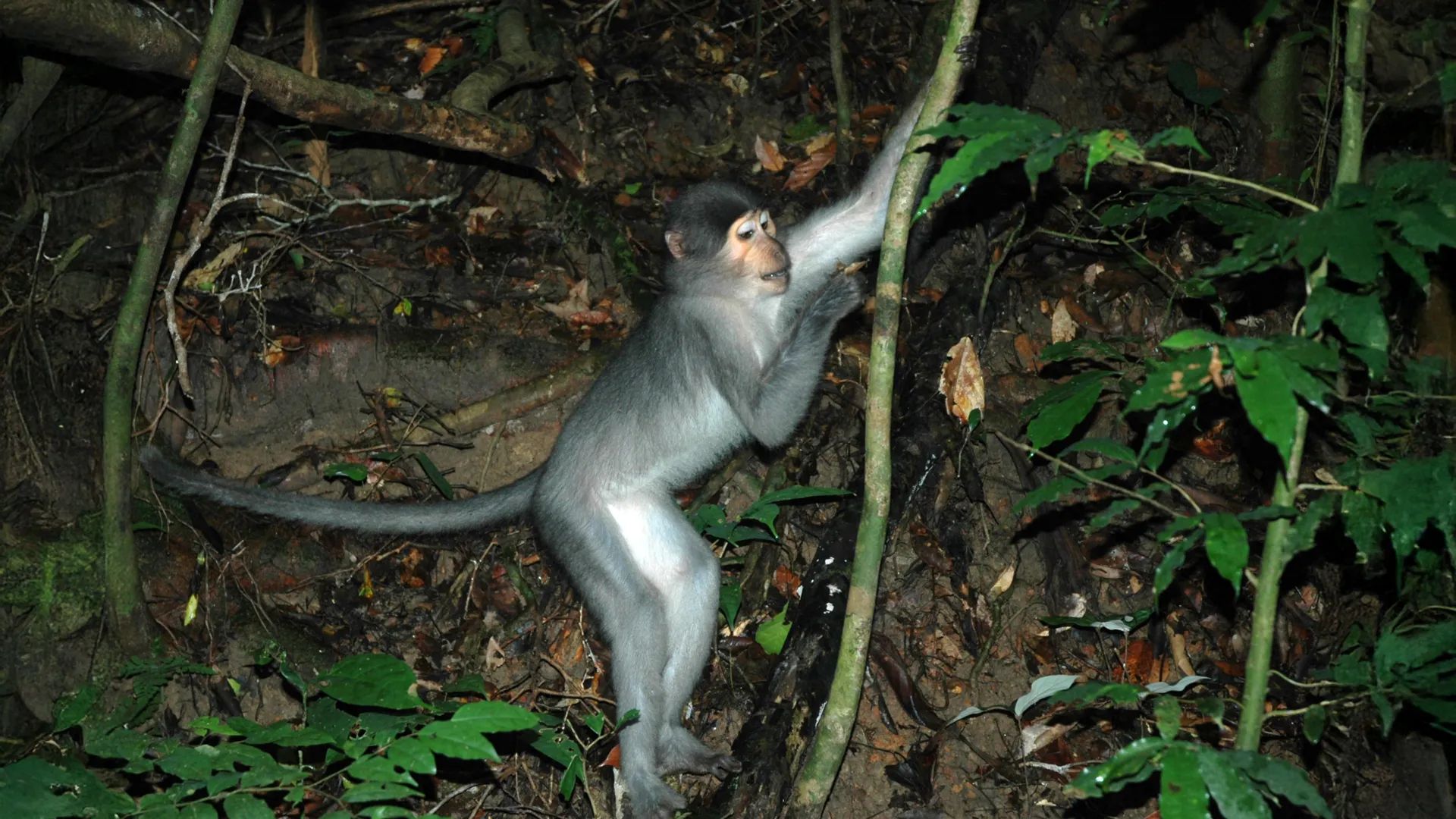
New research suggests that whatever scientists ultimately discover about the last common ancestor of humans and chimpanzees, one characteristic may be difficult to dispute: it was probably capable of climbing trees. Humans and chimpanzees went their separate evolutionary ways between 6 and 7 million years ago, when they diverged from the last common ancestor (LCA) they once shared. Reconstructing that ancestor has become an important part of understanding human evolution, including the emergence of walking on two legs.
One major question concerns where and how the LCA moved through forests. Did it spend much of its time among high horizontal branches, climb vertically from the ground, or combine both behaviors? Rethinking What Feet Reveal About Climbing Chimpanzees are highly capable tree trunk climbers, aided by ankles that can flex much farther than human ankles.
Monkeys, by contrast, have often been viewed as relying more heavily on their arms to move through trees. That distinction has influenced ideas about whether the human-chimpanzee ancestor should have possessed feet more like those of modern apes or monkeys. New video evidence from West Africa is challenging that assumption.
Researchers from The Ohio State University studied wild sooty mangabey monkeys, whose feet do not have the same highly flexible ankles found in chimpanzees. Detailed observations and measurements showed that the monkeys can nevertheless bend parts of their feet enough to climb narrow vertical tree trunks while seeking food, hiding or finding places to sleep. "People are making behavioral inferences from fossils, and some say a monkey can't vertically climb as well as an ape can," said first study author Luke Fannin, assistant professor of anthropology at Ohio State.
"We're saying there's a functional equivalence here. So you can't rule out vertical climbing just because something doesn't have a chimpanzee-like foot." The research appears this week in Proceedings of the National Academy of Sciences. Determining what the LCA looked like and how it moved could help researchers understand the evolutionary steps that eventually produced habitual bipedalism, a form of movement practiced regularly only by humans.
Humans are apes, but the new findings suggest that an ancestor with feet resembling those of monkeys might still have been capable of climbing in ways comparable to modern apes. "Part of paleoanthropology is understanding how our evolution happened, and it's often through the hallmark of how we move because modern humans move quite differently than our cousins, the chimpanzees, do, and they're the living primate we're most closely related to," Fannin said. "And we're trying to understand why that is." Fannin collected video of wild mangabeys at the Taï Forest Monkey Project field station in Ivory Coast.
Extract — continue reading at the source.