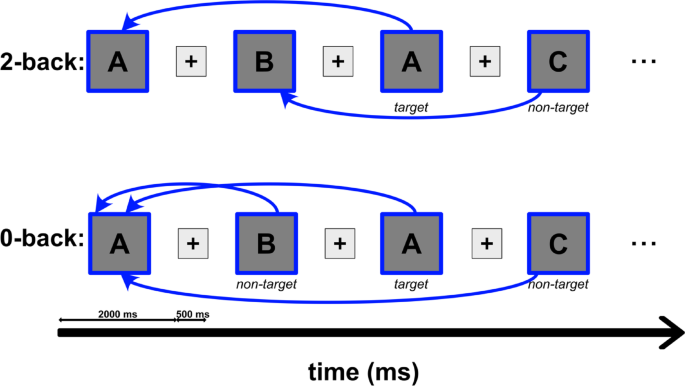
Working memory (WM) is a core determinant of cognitive functions, and its impairment is a hallmark of several psychiatric conditions. Here, we investigated whether genetic factors contribute to WM performance. Analyzing magnetoencephalography (MEG) data from the Human Connectome Project (82 healthy adults: monozygotic [MZ] and dizygotic [DZ] twin pairs and unrelated [UR] pairs) performing WM tasks, we observed that WM accuracy is markedly more similar within MZ twin pairs than in DZ or UR pairs, indicating a genetic contribution to WM performance.
To uncover a candidate neural mechanism for this genetic influence, we quantified phase-amplitude coupling (PAC)—the modulation of high-frequency amplitude by low-frequency phase—and compared PAC patterns across individuals. We define PAC alignment as the between-individual similarity of PAC temporal patterns. PAC alignment was significantly higher in MZ than in DZ or UR pairs and positively correlated with similarity in WM behavioral accuracy, linking PAC to behavior.
Together, these findings support PAC alignment as a candidate genetically influenced neural feature related to individual differences in WM. Cross-frequency coupling (CFC) is a neural mechanism through which the phase or amplitude of one oscillatory frequency modulates the properties of another frequency1. Among different forms of CFC, phase-amplitude coupling (PAC) is one of the most prominent and widely observed, referring to the modulation of higher-frequency oscillatory amplitude by the phase of lower-frequency rhythms.
Because low- and high-frequency oscillations are often associated with large-scale contextual signaling and local neuronal processing, respectively, PAC provides a plausible mechanism by which feedback and feedforward information streams can be coordinated across distributed brain regions2,3,4,5,6. Consistent with this role, PAC has been implicated in key cognitive processes, including attention7,8,9, sensory processing10, decision-making11, and working memory12,13,14. Related work has further shown that attention and visual-cognitive processing are strongly shaped by oscillatory phase, phase locking, and selective coupling mechanisms15,16,17.
Evidence from prior studies suggests that neural oscillations are heritable features that differentiate individuals and relate to cognitive abilities18,19,20. Recent research has demonstrated that high-level cognitive functions are influenced by genetic factors, with notable heritability observed in traits such as category selectivity21, face recognition22,23, decision-making24, attention25,26, and working memory27,28. Given the heritable component of these cognitive functions and the established role of PAC in modulating these functions, it is plausible that heritable factors contribute to PAC as well.
To investigate this hypothesis, we use twin studies, a robust method for distinguishing genetic from environmental influences on traits by comparing monozygotic to dizygotic twins. Employing data from the Human Connectome Project29, we examine whether the specifics of PAC are heritable, focusing on its modulation during working memory tasks. To quantify PAC pattern similarity, we measured the between-subject correlation of low-frequency components time-locked to high-frequency amplitude peaks and refer to this measure as PAC alignment.
Extract — continue reading at the source.