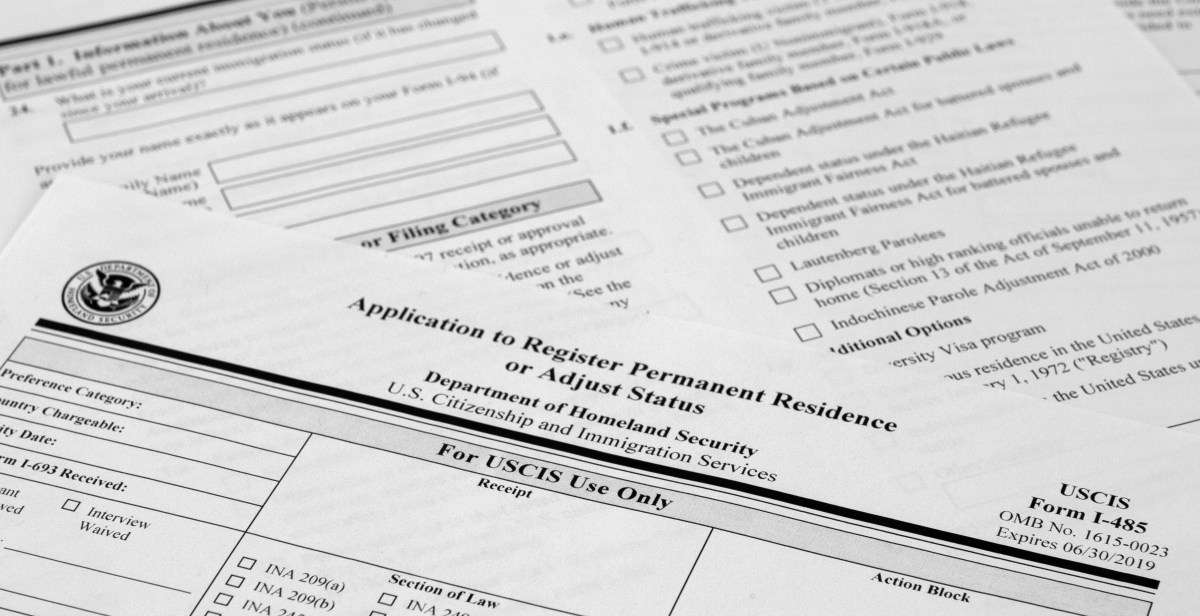
Green card approval rates fell in three major categories in the third quarter of fiscal year 2026, with Cuban applicants experiencing the steepest decline, according to federal data. Citizenship and Immigration Services (USCIS) data for April through June show that approval rates among decided adjustment-of-status applications fell from the previous quarter for family-based (down 4.2 percentage points), employment-based (down 0.9 points), and Cuban cases (down 28.9 points) compared with the previous quarter. Rates increased for asylum-based cases (up 0.8 percentage points) and refugee-based cases (up 3.5 points).
Overall, the approval rate for decided green card applications fell by 2.6 percentage points from the second to the third quarter. USCIS administers legal immigration benefits, including applications for lawful permanent residence. The Trump administration has increased scrutiny across the immigration system, aimed at rooting out what officials describe as fraud and abuse, raising concerns about growing obstacles immigrants face in obtaining permanent residency.
Of 586 Cuban adjustment decided cases in the third quarter, 139 were approved and 447 denied, producing an approval rate of 23.7 percent. In the January-to-March quarter, 50 cases were approved and 45 denied, an approval rate of 52.6 percent. USCIS recorded 54,678 family-based approvals and 12,240 denials from April through June, compared with 71,514 approvals and 11,689 denials in the previous quarter.
Employment-based adjudications were steadier. There were 42,076 approvals and 3,160 denials in the third quarter, compared with 41,979 approvals and 2,717 denials in the second. Meanwhile, the number of applications received shifted sharply in some categories.
Family-based receipts fell from 127,189 to 95,175, while employment-based receipts more than doubled, rising from 47,514 to 97,501. Cuban receipts fell from 15,312 to 6,279. Approval rates for asylum-based adjustment cases rose slightly, to 88.9 percent from 88.1 percent, while the rate among refugee-based cases increased to 69.6 percent from 66.1 percent.
Among family-based applications for permanent residence that were either approved or denied, the approval rate fell to 81.7 percent from 86 percent between the second and third quarters of fiscal year 2026. The rate for employment-based cases edged down to 93 percent from 93.9 percent. This is a developing story; more to follow.
Extract — continue reading at the source.