My father didn’t want to know what, if anything, the FBI had on him. Or at least that’s what my mother claimed. But after he died, as I sifted through his United Nations personnel documents and wartime correspondence to and from China, I couldn’t help thinking Dad must have been investigated at some point.
So in 2014 I made a Freedom of Information Act request for his files. The following year I received two zipped digital folders containing more than a hundred pages of heavily redacted FBI records pertaining to my deceased father, Maurice T. Those copious field reports, sworn affidavits, and telegrams signed, alarmingly, HOOVER, would fascinate, enrage, and unmoor me.
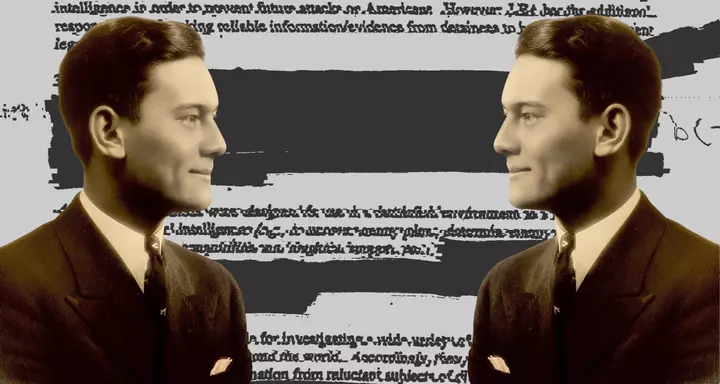
My dad cut a singular figure. From his scholarly Chinese father, he inherited a penetrating gaze and thick, wavy black hair, which he parted sideways above the same discreet widow’s peak that he passed down to me. His strawberry-blond American mother had given him her graceful neck and tall, sleek but broad-shouldered build.
Dimples, which I also inherited, appeared in Dad’s beardless cheeks whenever he performed a smile, and strangers were inevitably taken by surprise when his low voice rumbled out British diction worthy of Laurence Olivier. Those pieces of my father, combined with his careful posture, studied reserve, and air of distinction, formed a confident package until you noticed the Kent forever slung from the corner of his mouth or the way his blunt fingers mangled each other’s cuticles, as if his hands were programmed to punish themselves. That habit of manual masochism, too, lives on in me.
In fact, we shared so many similarities that I long felt I’d never make sense of myself until I understood him. I devoted decades to that quest. He was born in 1912 in a French hospital in the International Settlement of Shanghai.
My white grandmother gave her baby the French name Maurice out of gratitude to the doctor and nuns who delivered him. My grandfather, then a senator in the fledgling Chinese Republic, named his son Jialu; British classmates at the Shanghai Public School pronounced the boy Morris. And when Dad got to the University of Southern California and briefly tried his hand at acting in the 1930s, casting directors rechristened him Lee Byron.
Extract — continue reading at the source.