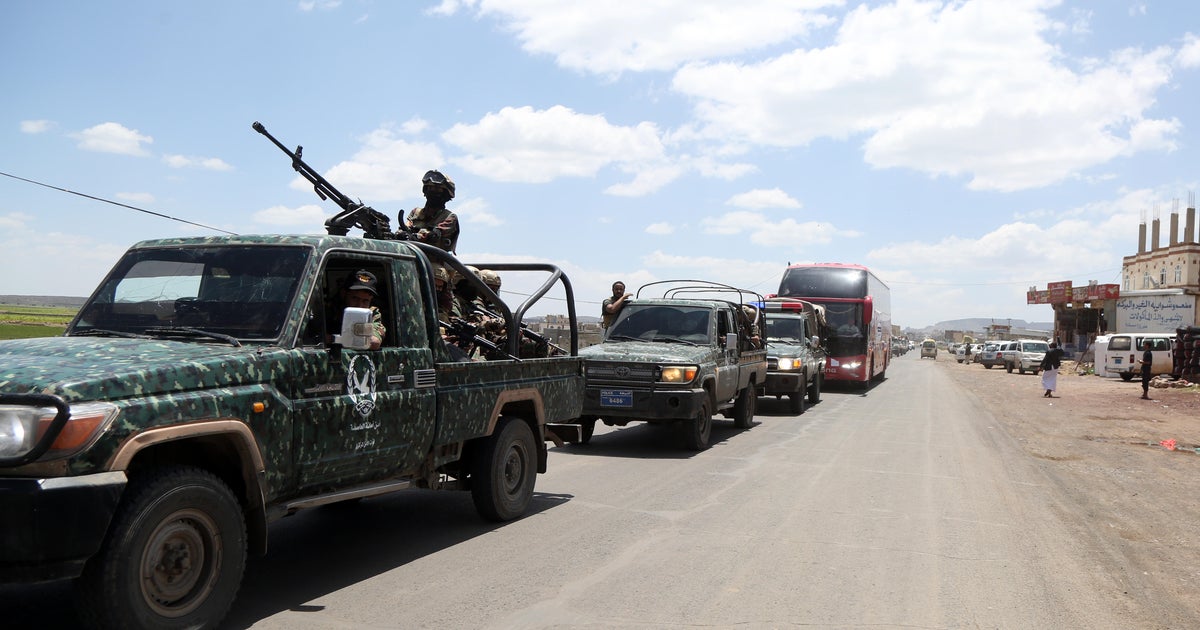
Escalating fighting between Yemen's Iran-backed Houthi rebels and Saudi Arabia, and attacks by other Iranian proxy forces on Saudi infrastructure, are increasing the threat to tanker traffic in the Middle East and driving up global fuel costs more than six months after the U.S. and Israel launched their war on Iran. Direct clashes between the U.S. and Iran have severely reduced shipping traffic through the Strait of Hormuz since the war began, but the Houthi-Saudi tension, and attacks on Saudi infrastructure blamed on other Iran-backed groups, are also squeezing global fuel supplies in the nearby Red Sea. Before the war began, about 30% of oil supplies typically reached the global markets by tanker from the Persian Gulf via the Strait of Hormuz (about 20%) and the Red Sea via the Bab el-Mandeb Strait (about 10%) combined.
The ongoing threat to ships in the Strait of Hormuz, combined with rising tension around the Bab el-Mandeb and attacks on Saudi infrastructure, helped push the price of Brent crude, the international benchmark for oil, up to a near-4-month-high on Monday of about $108 per barrel. Brent crude was trading at an average of $67 per barrel in the days leading up to the start of the war at the end of February. "The spike in price is due to the East-West pipeline in Saudi being damaged and shut," Dimirtis Maniatis, head of the Greece-based Marisks maritime risk agency, told CBS News on Monday, referring to an attack last week on a vital Saudi Arabian crude oil pipeline.
Saudi Arabia has used the East-West pipeline to export oil from its Red Sea ports as an alternative to ports in the Persian Gulf since Iran started attacking ships and infrastructure around the Strait of Hormuz early in the war. The pipeline, originally built during the Iran-Iraq War of the 1980s in response to the same threat from Iran to shipping in the Persian Gulf, was brought back up to full capacity in April after being hit by Iran early in the war. It enables Saudi Arabia to divert its oil about 745 miles west across the kingdom from the Persian Gulf to its Yanbu Port on the Red Sea.
From there, energy products can typically be shipped to markets in Europe and Asia via the Bab el-Mandeb Strait, the southern gateway to the Red Sea. But the Houthis, a powerful Iranian proxy force, declared a blockade of Saudi Arabia's Red Sea ports in late July and started targeting tankers owned or operated by Saudi Arabian companies, giving the kingdom little room to maneuver. No group has claimed responsibility for the attacks on the pipeline, although Iraq's government said Saturday they were launched from its territory, where a number of Iran-backed militias operate.
Tehran has denied any involvement in the attack. Saudi Arabia's crude oil output fell under 6 million barrels per day in August, down from around 8 million barrels per day the previous month and well under its target of 10.42 million barrels per day, according to the latest International Energy Agency (IEA) oil market report. Long-term disruption to the East-West pipeline could take about 4% of the world's oil supply offline, according to , compounding the losses created by the Strait of Hormuz closure and the threat to Saudi ships in the Red Sea.
The quoted two anonymous regional officials Monday as saying the pipeline could take 3-5 weeks to bring fully back online. Maniatis noted that the Houthis have not yet threatened global shipping in the Red Sea, focusing their attacks so far entirely on Saudi assets. The Houthis said last week that the Red Sea remained safe for the majority of tanker operators, but the Lloyd's List maritime intelligence firm said that had done little to reassure shipowners or operators, especially after the rebels seized the port city of Mokha on Yemen's Red Sea coast and captured the strategically important island of Perim in the center of the Bab el-Mandeb.
Extract — continue reading at the source.