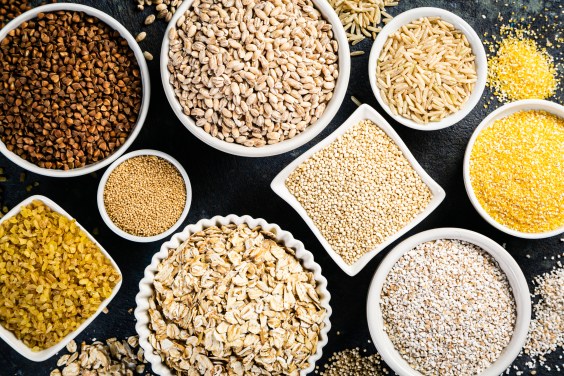
Health and Human Services Department under Secretary Robert F. Kennedy Jr. declared an end to the “war on protein” and released a new, inverted food pyramid that put imagery of a steak and block of cheese at the top, with whole grains at the very bottom. But a meta analysis out this week suggests that, rather than worrying about “ending” a “war” on protein—far from a forgotten macronutrient, given the explosion in high-protein supplements and snacks—we should instead focus on that nutrition piece now relegated to afterthought status.
The study, which incorporated data from 87 clinical trials, found that eating four to six servings of whole-grain foods each day was associated with a significant reduction in risk of developing cardiovascular disease. Basically, the more whole grains a person ate, the lower their risk of cardiovascular disease seemed to be. The study was published this week in the European Heart Journal.
Read more: “What Exactly Is a Superfood Anyway?” “This is the largest and most comprehensive meta-analysis of randomized controlled trials on whole-grain intake and cardiovascular risk factors,” said lead author Helda Tutunchi, an associate professor of nutritional science at Tabriz University of Medical Sciences in Iran, in a statement. The meta analysis included data taken from more than 6,500 people from trials that were conducted in the United States, Canada, Asia, Europe, and Brazil. Meta analyses are unique in that they combine the results of multiple studies that all ask the same question to get a best estimate of an overall effect.
In this case, the researchers sought not only to understand what effect whole-grain intake has on our health, but also to investigate how much whole grains are necessary for these benefits. To that end, the studies showed that eating more whole grains was associated with lower body weight, waist circumference, blood pressure, and levels of both total cholesterol and low-density lipoprotein, triglycerides, glucose, and inflammation markers. The data uncovered consistent correlations between these improved health metrics and eating 30 to 40 grams of whole grains per day, which is about two to three daily servings.
Interestingly, though, even more servings per day seemed to correlate with even better health. The analysis showed that the greatest benefits to health were among those eating 60 to 100 grams of whole grains per day, which is about four to six servings and “toward the upper end of current dietary recommendations,” according to Tutunchi. As for where we’re at now, studies show that many Americans eat far less than the recommended amount of two to four servings of whole grains per day, and when they’re eaten, they’re rarely eaten in their whole form.
Moreover, the authors of an editorial that accompanied the study wrote that the current U.S. dietary guidelines, which also emphasize “real food” and a reduction in overall intake of ultra-processed products (which lack whole grain), might not be good enough. But this study, and others like it, are a reminder that whole grains are still an important component of eating in a way that both promotes health and prevents disease. Subscribe to our free newsletter.
Extract — continue reading at the source.




/https://tf-cmsv2-smithsonianmag-media.s3.amazonaws.com/filer_public/a1/be/a1bec4ea-0428-4b24-bd7e-a84a00f9fe79/dsc_4882.jpg)