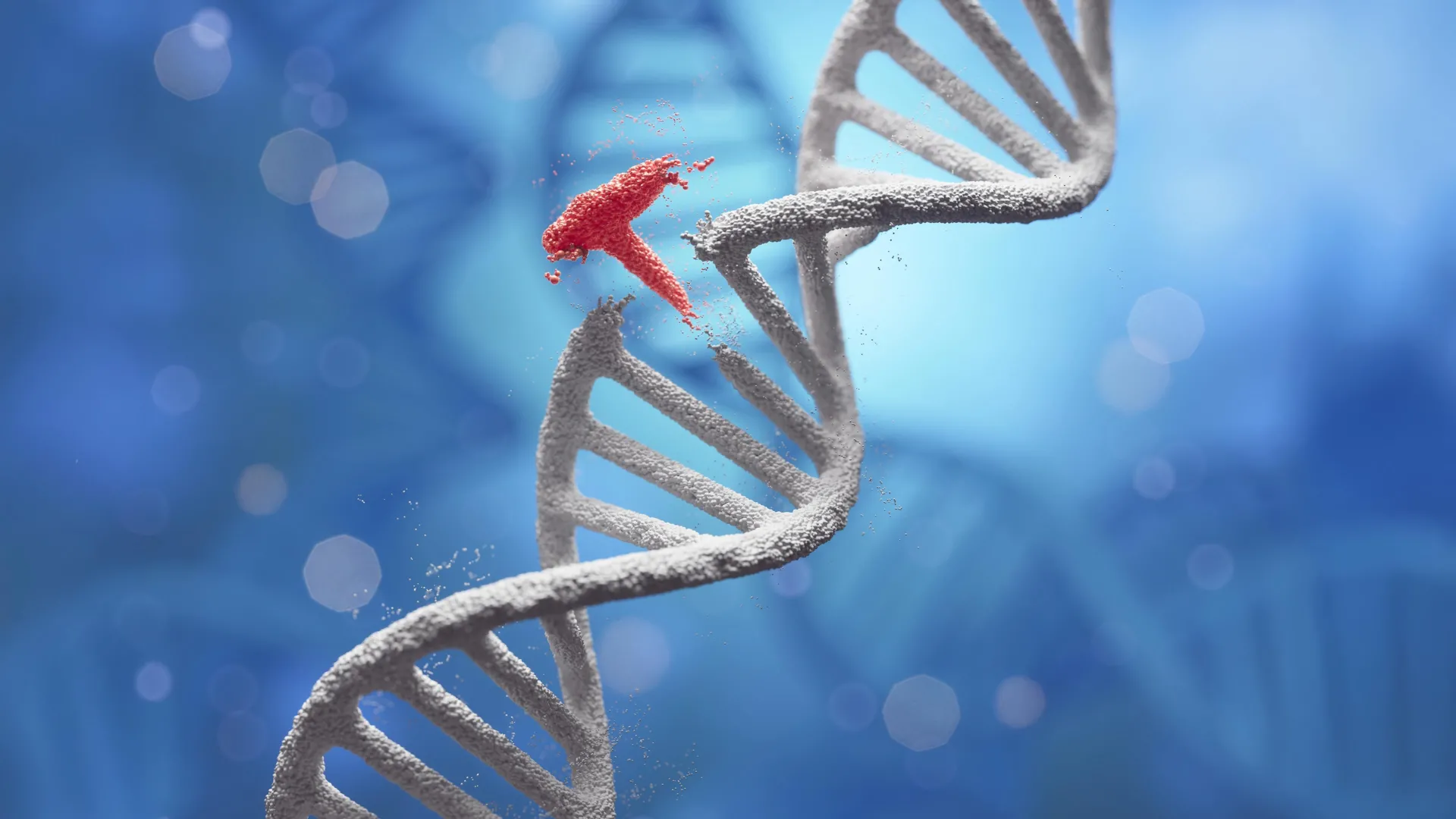
DNA consists of long molecular chains that carry the genetic instructions needed for life. In genetic engineering, researchers cut DNA at carefully chosen locations and connect those pieces with other DNA sequences. This process supports a wide range of applications, including improved crop breeding, treatments for genetic diseases, and the creation of animal models used in drug development.
To efficiently connect short pieces of DNA, scientists rely on overhanging sequences called sticky ends. These exposed sections help DNA fragments bind to one another. Producing the right sticky ends, however, requires highly precise cutting at specific locations, something existing technologies do not always handle well.
Researchers in Japan have now developed a method that uses silver nanoparticles to cut and reconnect DNA at targeted sites. The technique produced DNA assembly efficiencies two to five times higher than those achieved with conventional restriction enzyme methods. The findings were published in Nucleic Acids Research.
Limitations of Conventional DNA Assembly Standard methods for assembling long DNA molecules typically use restriction enzymes to make cuts and T4 DNA ligase to connect the resulting fragments. Restriction enzymes, however, can only recognize and cut certain DNA sequences. They also tend to produce sticky ends that are relatively short, which can reduce the efficiency of the joining process.
Seeking an alternative, a team led by Professor Hiroshi Abe and Assistant Professor Masahito Inagaki at Nagoya University, working with Professor Natsuhisa Oka at Gifu University, investigated whether chemical reactions could be used to cut DNA at selected locations instead of relying on restriction enzymes. The researchers revisited a reaction first reported between 1990 and 1992 in which silver ions cut 3'-thiol-modified DNA at specific sites. They tested whether this reaction could be used to create useful sticky ends.
Silver ions were effective at cutting the DNA, but they also attached nonspecifically and caused precipitation. As a result, only about 14% of the DNA could be recovered, far too little for practical applications. Silver Nanoparticles Improve DNA Recovery The team next replaced silver ions with silver nanoparticles.
Extract — continue reading at the source.