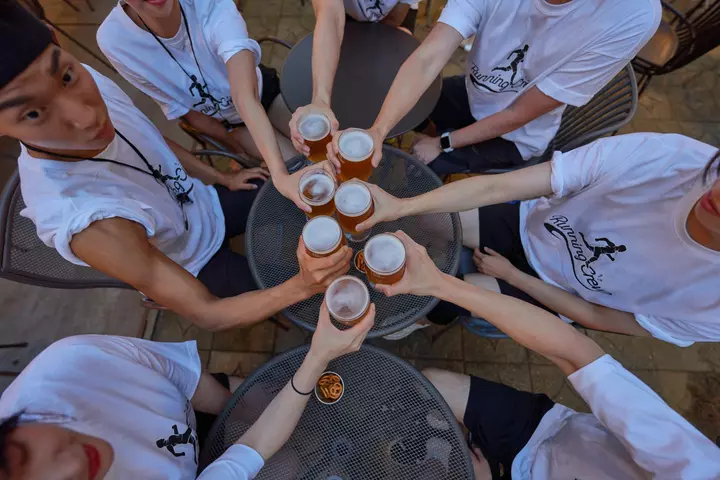
When you have a big workout or long run coming up, you probably think through your usual checklist, like your fueling and hydration plan, what you’re going to wear, and the route you’ll take. But if you have a drink in the days leading up to that effort, it’s worth considering how it might disrupt your preparation, too. Alcohol can affect your sleep and your hydration—two things your body relies on to recover from training and prepare for the miles ahead.
And while the severity of its effects varies from person to person, even one drink can negatively affect an upcoming workout. Now, this doesn’t mean you have to give up every happy hour or celebration during a training cycle. But if you want to feel your best for every workout on your plan, it helps to think ahead.
Sports dietitian Pam Nisevich Bede, RD, CSSD, previously told Runner’s World she recommends avoiding alcohol for at least two days—ideally three—before a key workout, long run, or race. Without that buffer, you may find yourself feeling sluggish and under-recovered when it’s time to tackle your important effort, even if you prepared well in every other way. Even if you think a drink might help you fall asleep faster, Bede explains alcohol actually disrupts your sleep quality.
This is a concern for runners because sleeping well gives your body valuable time to recover from the training you’ve already done so you’re prepared for what’s next. According to research, just one drink within an hour of bedtime could reduce rapid eye movement (or REM) sleep, which supports functions including memory and focus. If your sleep is disrupted, you may wake up feeling tired and less ready to take on the workout you planned.
Alcohol will also affect your hydration status before a run as it increases urine production, explains Ron Maughan, PhD, an honorary professor at the University of St. Andrews whose research includes alcohol’s effects on athletic performance and recovery. Going into a long run or workout dehydrated can make it harder to perform your best, and therefore lessen the effectiveness of a workout.
These effects of alcohol don’t look the same for everyone, though. Maughan previously told Runner’s World that a small amount may have little effect on one person and a much bigger effect on another, so giving yourself more of a buffer is always a safer bet. Bede’s recommendation is a practical way to make sure you fully recover before a key effort.
Extract — continue reading at the source.