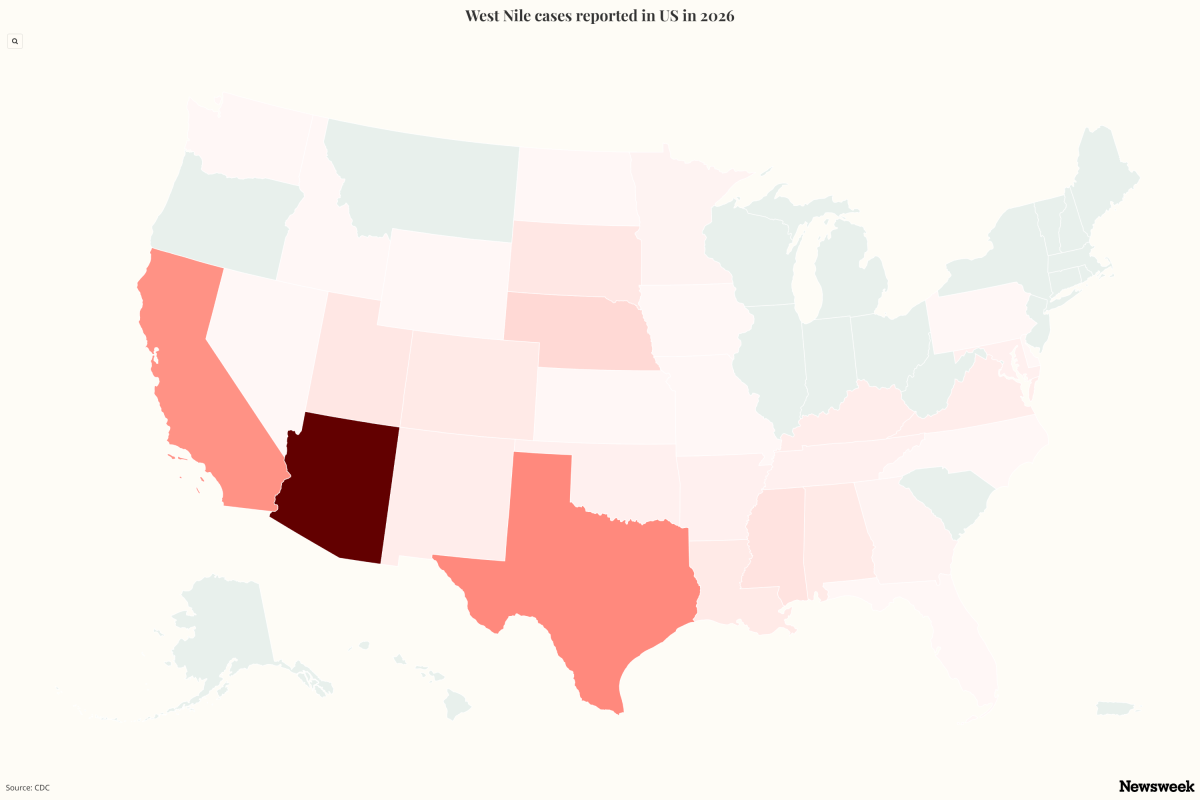
Cases of West Nile virus have been reported in 32 states this year as the mosquito-borne disease continues to infect people during the peak summer months, according to recent data from the U.S. Centers for Disease Control and Prevention (CDC). As of August 18, the CDC's ArboNET surveillance system had recorded 222 human West Nile virus disease cases nationwide, including 156 neuroinvasive cases, the most severe form of the illness that can affect the brain and nervous system.
The CDC's county-level map also shows widespread non-human activity, including infections detected in mosquitoes, birds and other animals, indicating that the virus is circulating well beyond areas where human cases have already been reported. The latest data comes as health officials warn that West Nile virus activity typically peaks in late summer and early fall. While most infected people never develop symptoms, severe infections can lead to hospitalization and death.
At least eight deaths have been reported so far this season. Five people died in Arizona and three died in California, The Independent reported. Newsweek reached out to the CDC by email for comment.
CDC data revealed Arizona as the state with the most reported cases of West Nile virus so far this year at 76, followed by Texas with 31 and California with 29. Of the 18 states that have no reported cases so far this year, many are concentrated in the Midwest, Mid-Atlantic, and Northeast. Alaska and Hawaii also have no reported cases.
Because there is no vaccine available for the general public and no specific antiviral treatment for West Nile virus, prevention remains the primary defense against infection. The CDC recommends avoiding mosquito bites by using Environmental Protection Agency (EPA) registered insect repellents, wearing long-sleeved shirts and pants when mosquitoes are most active, and ensuring window and door screens are in good condition. Health officials also encourage people to eliminate standing water around homes, where mosquitoes can breed.
Flower pots, buckets, bird baths, pet dishes and clogged gutters can all provide suitable habitat for mosquito larvae. Emptying or refreshing standing water regularly can help reduce mosquito populations. Most West Nile virus infections never cause symptoms.
Extract — continue reading at the source.