President Donald Trump has ordered a federal review of the protected status of gray wolves and Mexican wolves, launching a process that could lead to rolling back Endangered Species Act (ESA) protections for them across the United States. Under an executive order signed Friday, the interior secretary is directed to determine whether gray or Mexican wolves meet the criteria for delisting or downlisting, and to initiate rulemaking if warranted. The order also mandates legislative recommendations, closer coordination with states on local protections, updated compensation standards for livestock losses and streamlined authorization for the lethal removal of wolves when necessary.
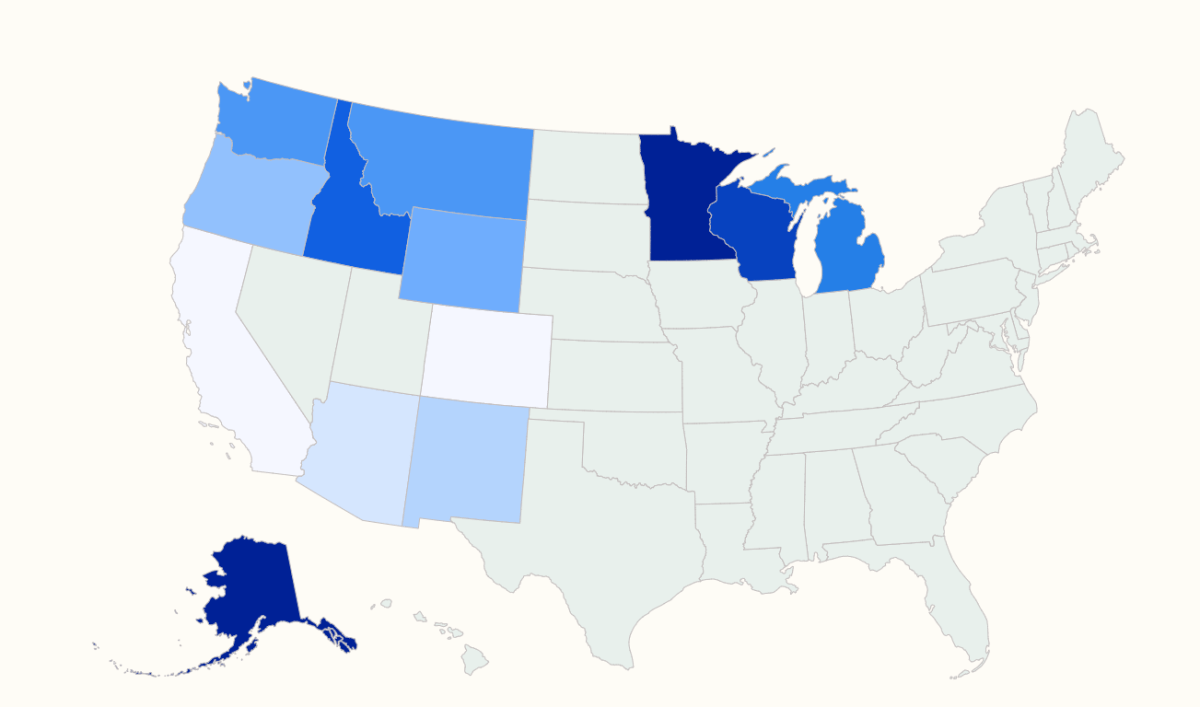
Alaska currently holds the nation's largest estimated gray wolf population, followed by Minnesota, Wisconsin and Idaho, according to data compiled by the Wolf Conservation Center from federal and state wildlife agencies. The Wolf Conservation Center’s compilation, based on data published in different years, lists the following state populations: The executive order does not immediately strip wolves of their federal protections. Fish and Wildlife Service, the formal delisting process ordinarily requires assessing whether recovery threats have abated, publishing a proposed rule in the Federal Register, securing public and expert input, and issuing a final rule or withdrawing the action.
The administration also presented the wolf management move as a way to help ranchers combat livestock predation and to ease industry anger over its expansion of lower-tariff beef imports. In an X post on Friday, Interior Secretary Doug Burgum wrote that the White House "is committed to lowering prices for American consumers” and helping ranchers. Together with [the Department of Agriculture], we are working to protect ranchers from predation, strengthen our food supply and bring down costs for families." Cattle producer trade association R-CALF USA’s President Dave Hyde said the broader ranching orders did not resolve every problem immediately but placed the administration’s weight behind efforts to address longstanding concerns facing cattle producers.
Agriculture Secretary Brooke Rollins said the measures would better equip ranchers and farmers to deal with predators threatening livestock. However, Humane World for Animals said weakening protections could jeopardize decades of wolf recovery, while Western Watersheds Project deputy director Greta Anderson described the move as “a huge distraction to placate a handful of ranchers and make them believe that wolves are a greater threat than President Trump’s own policies.” Contact Newsweek editors for this story: Tobias Meyjes and Anthony Murray.
Extract — continue reading at the source.