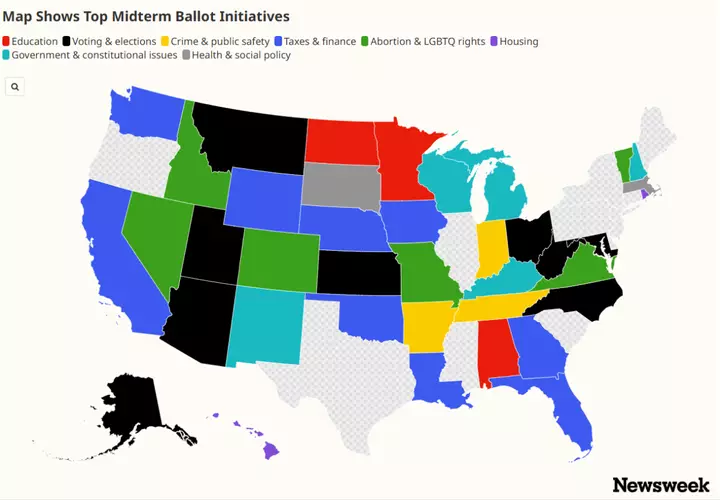
Voters across the United States are deciding dozens of consequential ballot questions on Election Day, with measures covering abortion access, same-sex marriage, voting rules, taxes, transgender policy, housing and criminal justice. The initiatives give voters a direct say over policies that could reshape state constitutions and laws even as control of Congress dominates the 2026 midterm election. Residents in 39 states will vote on 145 statewide measures on November 3, with some of the highest-profile contests concentrated in Virginia, California, Missouri, and other states.
In all, 164 statewide measures were certified in 40 states during 2026, including 19 that went before voters earlier in the year. That is the largest even-year total since 2018 and represents a 17 percent increase from the 140 measures considered during the 2022 midterm cycle. Louisiana has the most measures with 15, while California and Colorado each have 14.
The unusually crowded ballot extends far beyond any single partisan or cultural fight. Ballotpedia identifies constitutional rights, bond issues and public education governance among the year's most common subjects, while its list of 50 measures to watch groups major contests around voting, abortion and gender policy, taxation, housing, firearms and criminal justice. The votes come alongside the broader midterm elections, in which all 435 voting seats in the U.S.
House and 35 Senate seats are being contested. Thirty-nine gubernatorial elections are also being held across states and territories. Virginia is home to two of the most closely watched constitutional-rights questions.
Question 2 asks voters to remove language from the state constitution defining marriage as between one man and one woman and replace it with a provision preventing the state from denying marriage licenses to two adults on the basis of sex, gender or race. The marriage question is accompanied by Virginia Question 1, which would establish a state constitutional right to reproductive freedom covering decisions related to pregnancy. A third Virginia amendment would restore voting rights to people convicted of felonies after they are released from incarceration.
Taken together, the proposals make Virginia one of the clearest examples this year of voters being asked to define individual rights directly through the state constitution. Abortion policy is before voters in Idaho, Missouri, Nevada, and Virginia. Three of the measures would establish protections for abortion, while Missouri voters face a proposal moving in the opposite direction.
Extract — continue reading at the source.