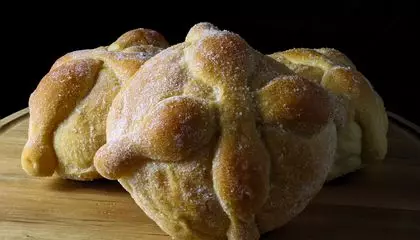
It’s autumn in Mexico City, and baker Elena Reygadas and her team at Panadería Rosetta are hard at work in the kitchen. Deftly, they shape mounds of soft, elastic dough into perfect rounds. Then, with two fingers, they gingerly form the huesitos, or little bones, laying the thin strips in a cross over the buns.
A tray full of rolls slides into the bakery rack, resting alongside dozens of other matching loaves waiting for their turn in the oven. The bakers are making pan de muerto, an orange-scented sweet bread traditionally prepared and eaten during Día de los Muertos, Day of the Dead, a Mexican holiday celebrated each year from October 31 to November 2. For three days, legend decrees, the border between the mortal and spirit realms disappears.
Families prepare ofrendas, colorful altars filled with candles, marigolds, sugar skulls, dishes piled with fresh food and water, and, of course, pan de muerto. As the souls of the dead wake and return to the mortal world, living and dead alike feast, dance and play music in a tradition that’s celebratory, not somber or mournful. These days, aficionados can scour Mexico City for varieties with such flavors as Biscoff, arroz con leche or limoncello.
But the traditional sugar-covered buns offered to the dead on ofrendas remain the treasured standard, representative of the history of Día de los Muertos as a whole. Both Día de los Muertos and pan de muerto are “colonial inventions,” according to Sandoval. Five other objects in Day of the Dead altars In Europe, Catholics have celebrated All Saints’ Day, a day of venerating Catholic saints, on November 1 since at least the eighth century, during the papacy of Gregory III.
In the following centuries, the celebration expanded to include All Hallows’ Eve, or Halloween, on October 31, and All Souls’ Day, a day of mourning and remembering the dead, on November 2. By the 1300s, Spanish mourners placed ceremonial breads on the tombstones of the dead during All Saints’ and All Souls’ Day, Sandoval explains. On All Souls’ Day, Catholics are encouraged to pray for the dead, assisting their deceased loved ones to proceed through purgatory, a process of purification souls must endure before entering heaven.
Candi Cann, a death and religious studies scholar at Baylor University, says these ceremonial breads were likely meant to nourish souls as they made their way through purgatory. The Indigenous populations in Mesoamerica, including the Aztec, Mixtec, Zapotec and Nahua people, had similar practices honoring the dead, Sandoval says. Many of these groups had a dedicated time of year when they would honor the dead, giving them offerings—precursors to the modern ofrenda—in exchange for good luck and plentiful harvests in the year to come.
Extract — continue reading at the source.