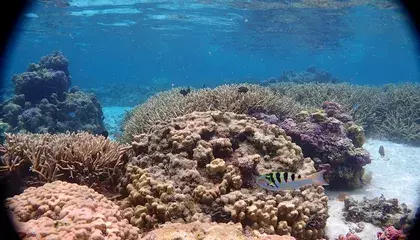
The world’s shallow-water coral reefs are in trouble: If climate change continues unchecked, most of these vital ecosystems could collapse within the next 50 years, experts predict. On October 22, the International Union for Conservation of Nature’s Red List of Ecosystems released its first global assessment of shallow-water reefs. The findings paint a grim picture.
Coral reefs in 122 of the 127 tropical and subtropical ecoregions they looked at—96 percent—are critically endangered, meaning they’re at extremely high risk of collapse by 2075. The list of critically endangered ecoregions includes the Great Barrier Reef off Australia, the Coral Triangle in the western Pacific Ocean and the Mesoamerican Barrier Reef System in the Caribbean, just to name a few. Four of the analyzed ecoregions had too little reef data for researchers to determine their statuses.
Even if some coral species manage to survive a broader ecosystem collapse, they could end up being too far apart from one another to reproduce, preventing them from rebuilding their populations. Most reef-building corals live in partnership with colorful, microscopic algae that reside in their tissues and use sunlight to make food, providing the corals with much of the energy they need to survive. When corals get stressed, particularly when ocean temperatures get too hot, they can expel their algae partners.
This process, known as bleaching, turns the corals bone-white and leaves them without a primary food source. If the stressful conditions persist, the corals can eventually starve to death. Earlier this month, researchers reported that a sick coral fragment can heal with the help of a ‘magic touch’ from a healthy, genetically identical piece.
Most individual corals are colonies of cloned polyps. The assessment found that heat stress resulting from climate change is the primary threat to coral reef ecosystems around the world. Rising ocean temperatures and marine heat waves are causing mass bleaching events, turning once-vibrant communities into barren underwater wastelands.
Overfishing and pollution also threaten the world’s reefs, which support roughly a quarter of all marine species and help provide food, jobs and protection for people in coastal communities. So far, just one of the world’s shallow-water coral reef ecosystems has collapsed, according to the IUCN: the one near the western Galápagos Islands. Those reefs lost more than 95 percent of their coral after the devastating 1982-83 El Niño event, which caused dramatic warming in the eastern Pacific, among other problems.
Extract — continue reading at the source.