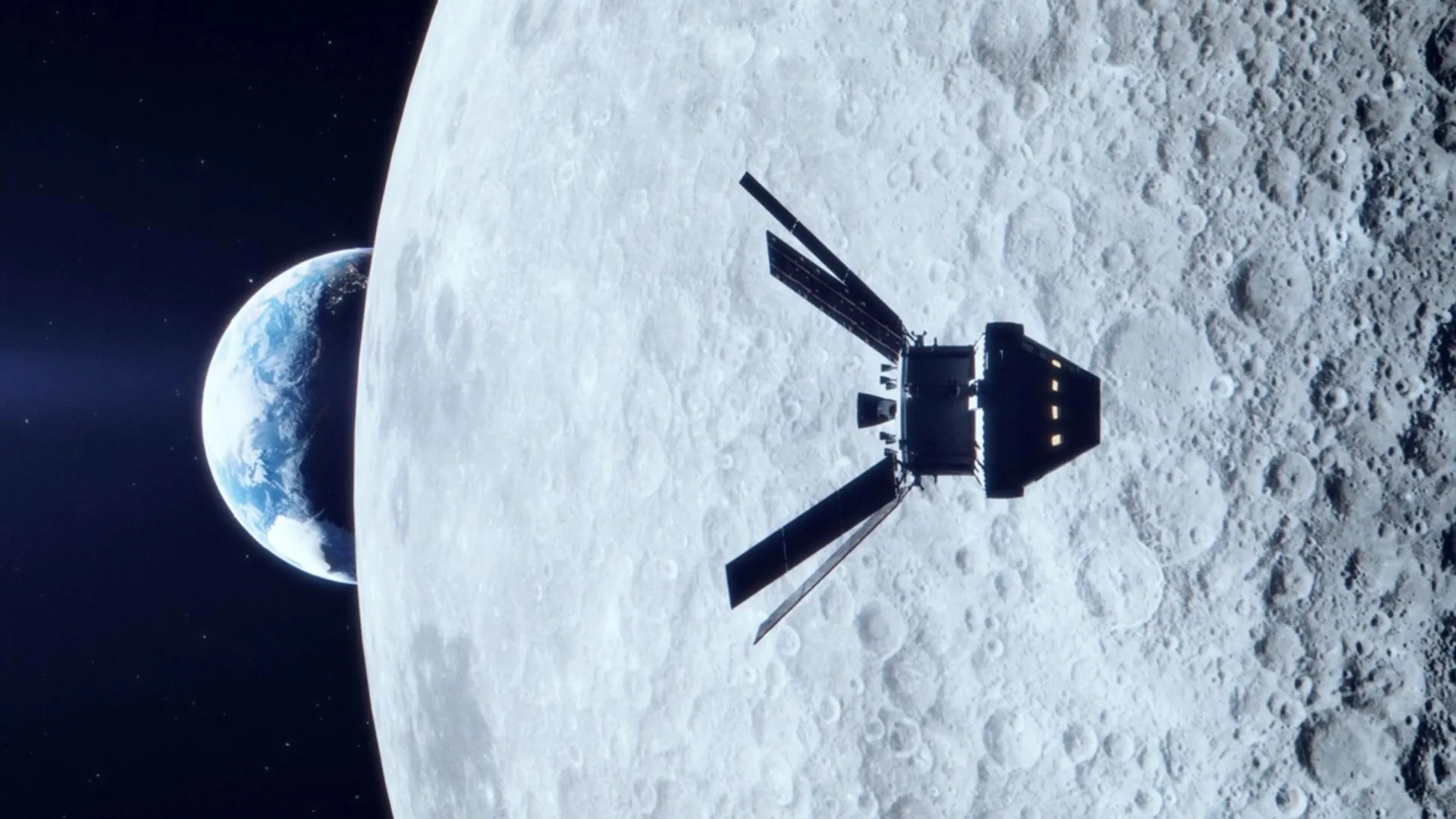
NASA's Artemis I mission has provided new insights into how much cosmic radiation astronauts may encounter near the Moon compared with low Earth orbit. Using experimental detectors made from lithium fluoride crystals aboard the Orion spacecraft, researchers have obtained preliminary measurements that reveal unexpected differences in radiation exposure between the two environments. During the uncrewed Artemis I mission in late November and early December 2022, Orion traveled around the Moon carrying more than 10,000 tiny crystals embedded inside two human-shaped mannequins.
These devices recorded radiation exposure throughout the journey. Among them were several dozen experimental fluorescent lithium fluoride detectors created by scientists at the Institute of Nuclear Physics of the Polish Academy of Sciences (IFJ PAN) in Cracow. The researchers have now described a new method for analyzing the information stored in these crystals, offering insights into both cosmic radiation levels and the performance of the detectors.
Their findings were published in the journal Radiation Measurements. "The fluorescent radiation dose detectors based on lithium fluoride, developed at our institute, are passive in nature. In other words, they work like photographic film: once the crystals have been exposed to radiation, the tracks left by individual particles must be analyzed optically under a microscope," explains Prof.
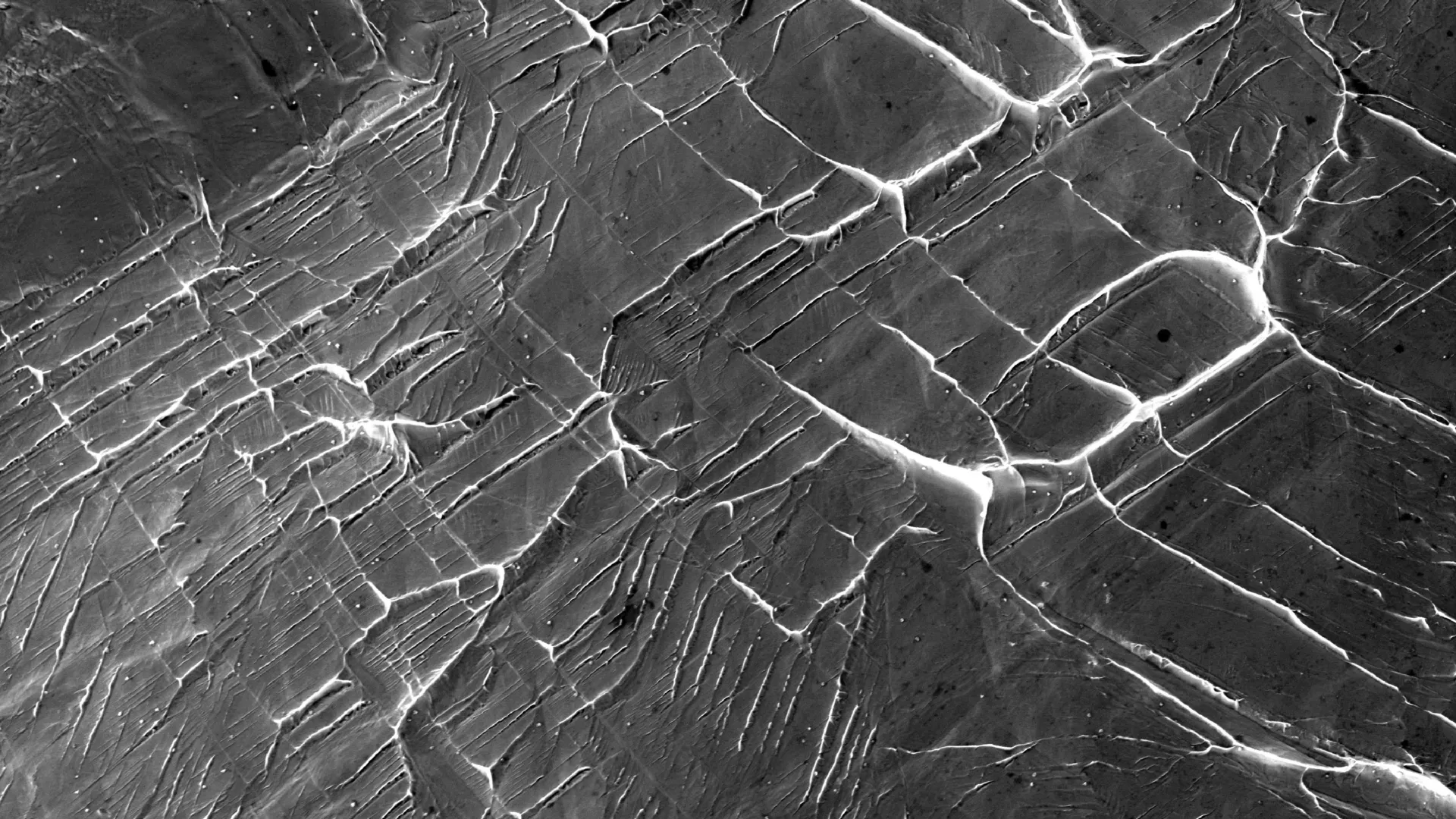
Pawel Bilski (IFJ PAN), one of the co-authors of the paper. How Tiny Crystals Detect Cosmic Radiation The lithium fluoride detectors work by capturing microscopic changes caused by radiation. When electrically charged particles pass through a crystal, they disrupt its internal atomic structure, creating defects known as color centers.
Scientists can later illuminate the crystal with blue light, causing these altered regions to glow red. By examining that fluorescence under a microscope, researchers can identify the paths taken by individual radiation particles. The detectors were part of the MARE (Matroshka AstroRad Radiation Experiment) study conducted during Artemis I.
Several dozen experimental lithium fluoride detectors were placed inside both mannequins, including some containing high concentrations of the lithium-7 isotope. The contribution from IFJ PAN extended beyond these experimental devices. Its scientists also supplied nearly 600 thermoluminescent crystal detectors, which use a different technique to measure radiation exposure.
Extract — continue reading at the source.