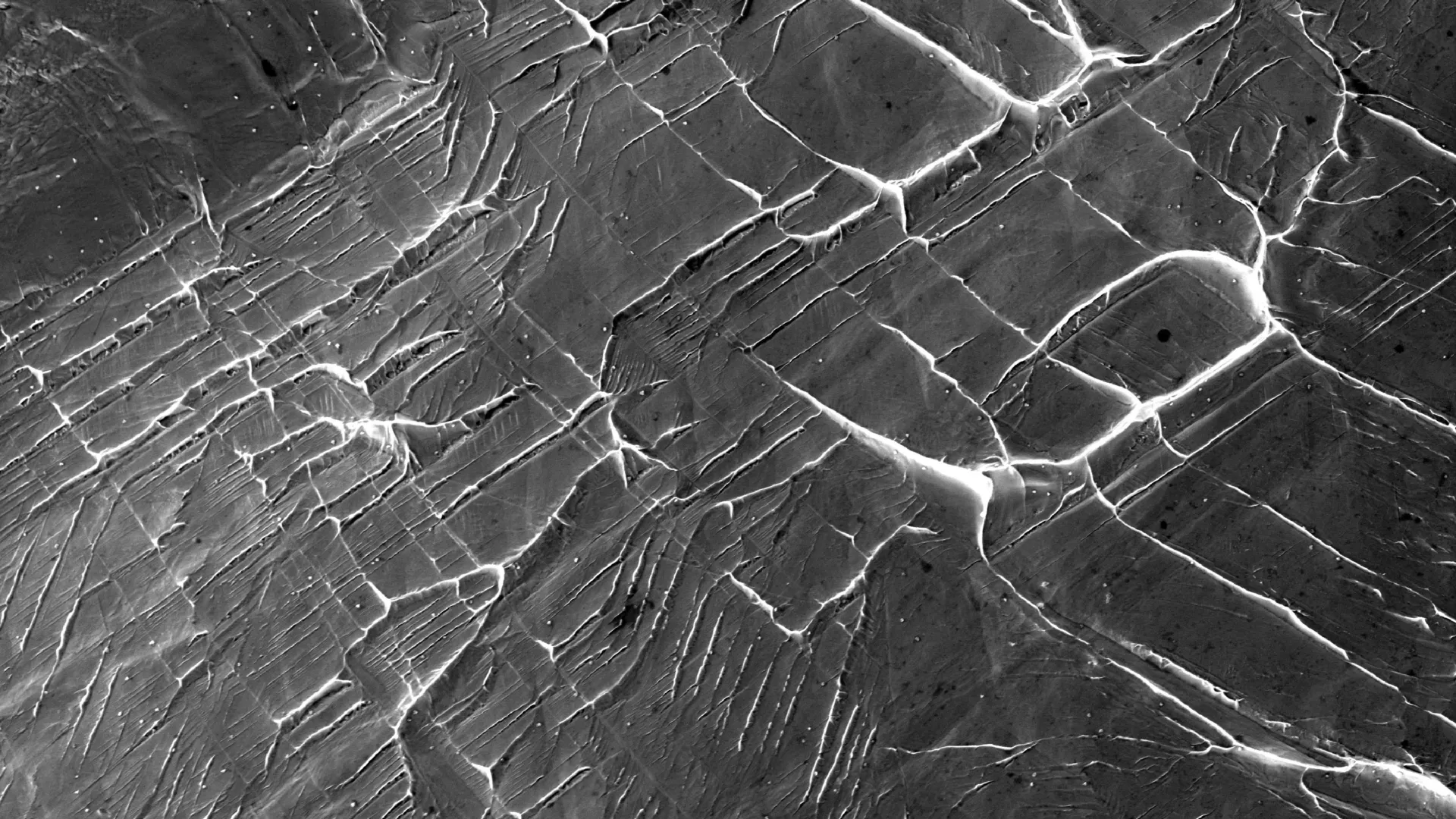
Scientists have uncovered an unexpected way certain metals can withstand extreme cold without becoming dangerously brittle. The discovery challenges long-standing ideas about how metals behave at extremely low temperatures and could help engineers develop tougher materials for some of the harshest environments imaginable. The findings, published October 14 in Nature, reveal a previously unknown microscopic process that allows two experimental metal alloys to remain remarkably resistant to damage at just 20 kelvin, or -253°C (-424°F).
The research was led by an international team from the University of California, Berkeley, Lawrence Berkeley National Laboratory, and the University of Oxford. Why Extreme Cold Makes Some Metals Brittle Cooling a metal generally increases its strength, but this improvement can come with a serious drawback. Certain metals become increasingly brittle as temperatures fall, making them more likely to crack or break instead of bending under pressure.
This problem is particularly important for a family of materials known as body-centered cubic metals (such as iron, tungsten, and chromium). Their atoms are arranged in a specific crystal pattern that can make them especially vulnerable to brittle failure in extreme cold. At temperatures approaching absolute zero, a small crack that might ordinarily be accommodated by the metal changing shape can instead spread and cause a fracture.
However, researchers discovered that two experimental alloys made from niobium and titanium behave very differently. Even when cooled to -253°C, both materials maintained an impressive ability to withstand damage. Neither showed a measurable shift toward brittle behavior at the lowest temperature tested.
The explanation lies in a surprising change in how the metals respond to stress. Rather than relying on their usual method of deformation, the alloys activate a different microscopic process that helps prevent cracks from spreading. A Hidden Mechanism Helps Metals Resist Cracking Under normal conditions, body-centered cubic metals bend and change shape through the movement of tiny defects within their crystal structures.
These defects, called dislocations, allow layers of atoms to shift relative to one another, helping the material absorb stress without breaking. As temperatures drop, however, these dislocations become increasingly difficult to move. With fewer ways to accommodate the forces concentrated around a crack, the metal becomes more likely to fracture.
Extract — continue reading at the source.